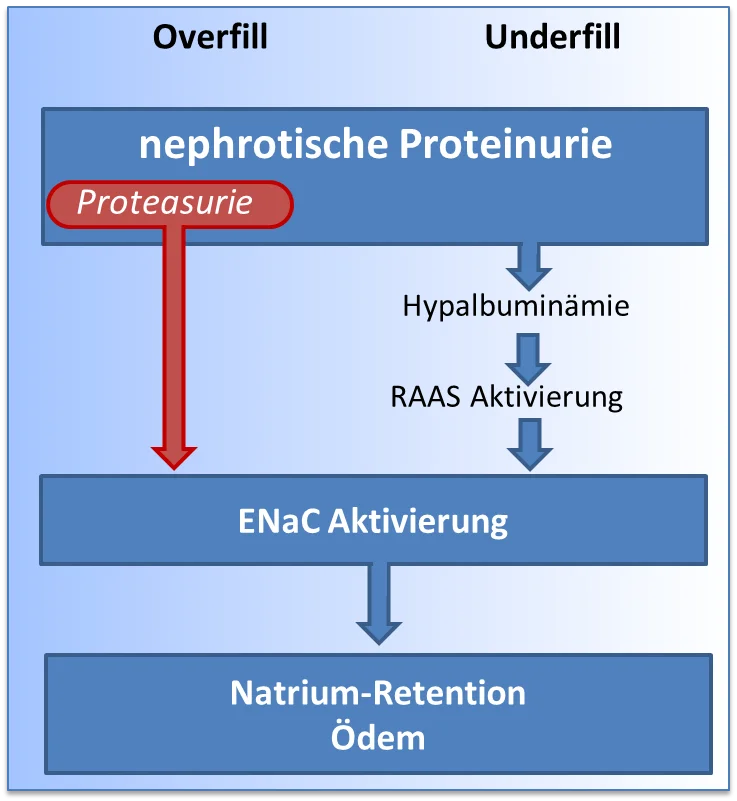
The research group of Prof. Dr. medical Ferruh Artunc addresses the importance of urinary excretion of active proteases in nephrotic syndrome, which has been termed proteasuria. Recent data indicate that proteasuria plays an important pathophysiological role in the development of typical sequelae of nephrotic syndrome such as sodium retention, hyperlipidemia, hypercoagulability and progressive kidney damage. The identification of the proteases involved could lay the foundation for new therapeutic approaches to treat patients with nephrotic syndrome through targeted inhibition of protease activity in the urine. In the nephrotic mouse model, this was shown to completely prevent sodium retention without quantitatively reducing proteinuria (Bohnert et al. Kidney International 2018).
Pathophysiology of Nephrotic Syndrome
Head of the Research group

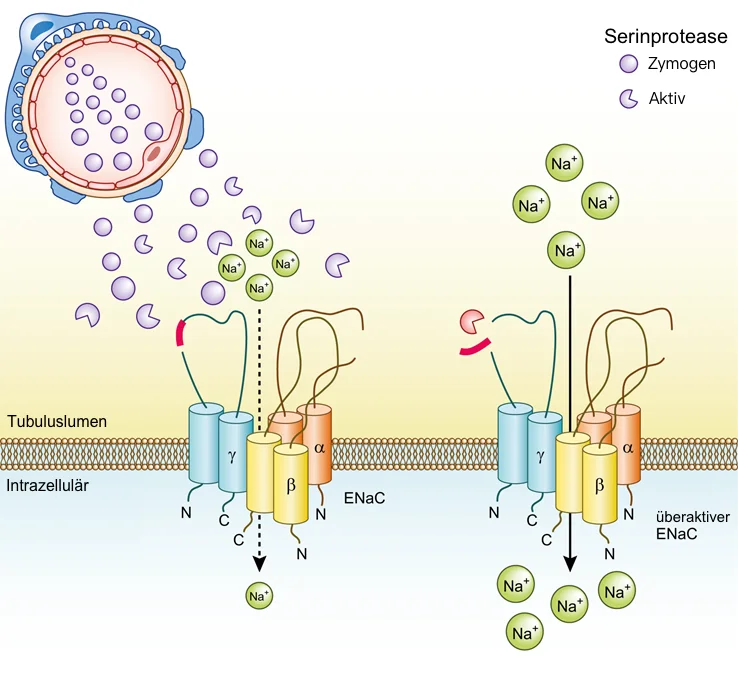
Modell der Aktivierung des epithelialen Natriumkanals im Rahmen der Proteasurie bei nephrotischem Syndrom
Epithelial sodium channel activation model in the context of proteasuria in nephrotic syndrome
Aprotinin-sensitive serine proteases are excreted into the urine (proteasuria) in glomerular disease and, once activated, can stimulate the ENaC in the distal tubule by cleaving the γ subunit, leading to sodium retention and the development of edema. Our research group characterized ENaC activation in nephrotic syndrome using various nephrotic animal models. We found that edema could be prevented both by inhibiting ENaC with amiloride and by inhibiting urinary protease activity. Data from mouse models with genetic deletion (“knockout”) of various serine proteases showed that proteolytic ENaC activation appears to be redundant and can be carried out by multiple serine proteases.
Studie an Patienten mit akutem nephrotischen Syndrom (EUDRACT-Nummer: 2019-002607-18)
AMILOR Study in Patients with Acute Nephrotic Syndrome (EUDRACT Number: 2019-002607-18)
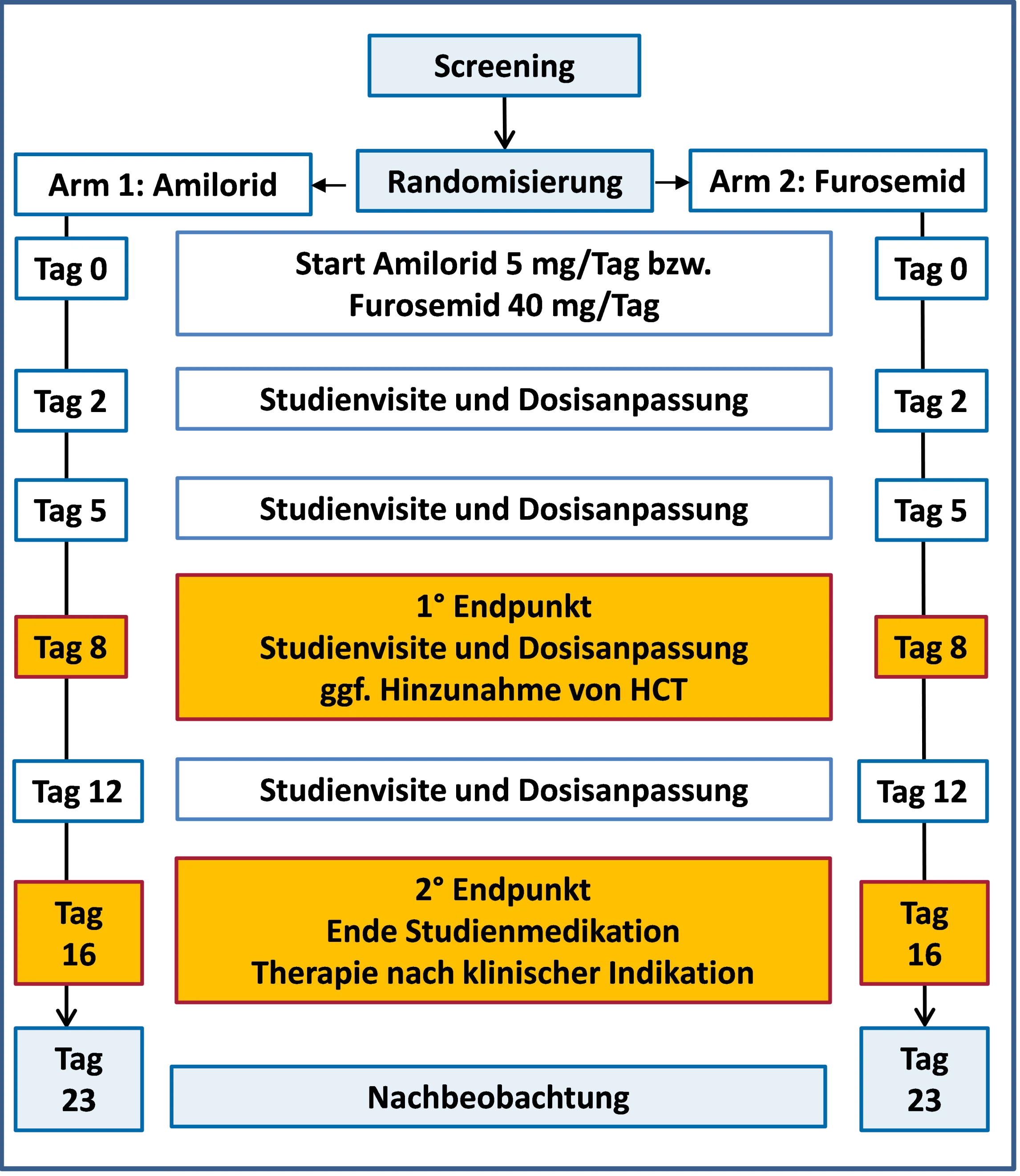
In this randomized intervention study initiated by us, we tested the effectiveness of the ENaC inhibitor amiloride compared to the standard treatment, furosemide, in reducing edema in patients with nephrotic syndrome.
Patients with acute nephrotic syndrome and edema were recruited. The primary endpoint was the reduction in fluid overload after eight days, expressed as a percentage of extracellular water, measured using bioimpedance spectroscopy (Body Composition Monitor, BCM) compared to baseline. During the course of the study, dose adjustments or the addition of hydrochlorothiazide were made depending on the patients’ response.
The study duration for the participating patients comprised a 16-day treatment period following the baseline examination.
Overall, after eight days, there was no significant difference in the reduction of fluid overload between treatment with amiloride and furosemide. The study had to be terminated prematurely due to insufficient statistical power and limited recruitment opportunities amid the COVID-19 pandemic.
Despite its limited statistical power, the AMILOR study suggests that amiloride may represent an alternative for treating edema in patients with nephrotic syndrome, particularly those with refractory edema. The AMILOR study also suggests that nephrotic syndrome leads to ENaC activation in humans.
Publication on the study: https://onlinelibrary.wiley.com/doi/10.1111/apha.14183
Editorial on the study: https://onlinelibrary.wiley.com/doi/10.1111/apha.14195
Medienbeiträge
Overview:
Uncovering the Mechanisms Behind Nephrotic Syndrome to Develop Novel Therapeutics
Doxorubicin-induced mouse nephrotic syndrome
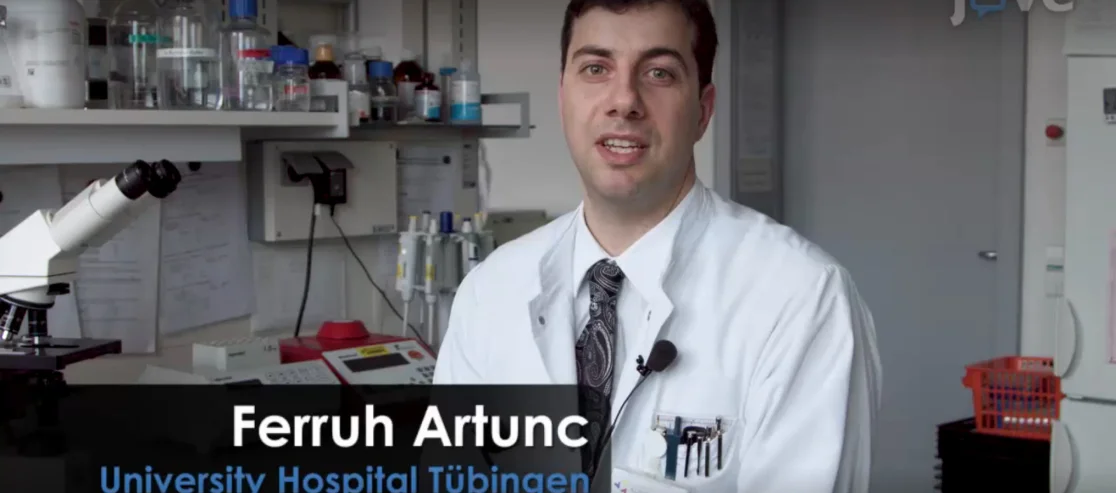

Induction of Nephrotic Syndrome in Mice by Retrobulbar Injection of Doxorubicin and Prevention of Volume Retention by Sustained Release Aprotinin
Watch videoOverview of the projects of Prof. Dr. medical Ferruh Artunc
Basic Research:
Significance and Role of Proteasuria in Nephrotic Syndrome (Dr. Bernhard Bohnert)
Model of epithelial sodium channel activation in the context of proteasuria in nephrotic syndrome (Dr. Bernhard Bohnert, Daniel Essigke)
Investigation of the role of serine proteases in the development of edema in nephrotic syndrome (Dr. Matthias Wörn)
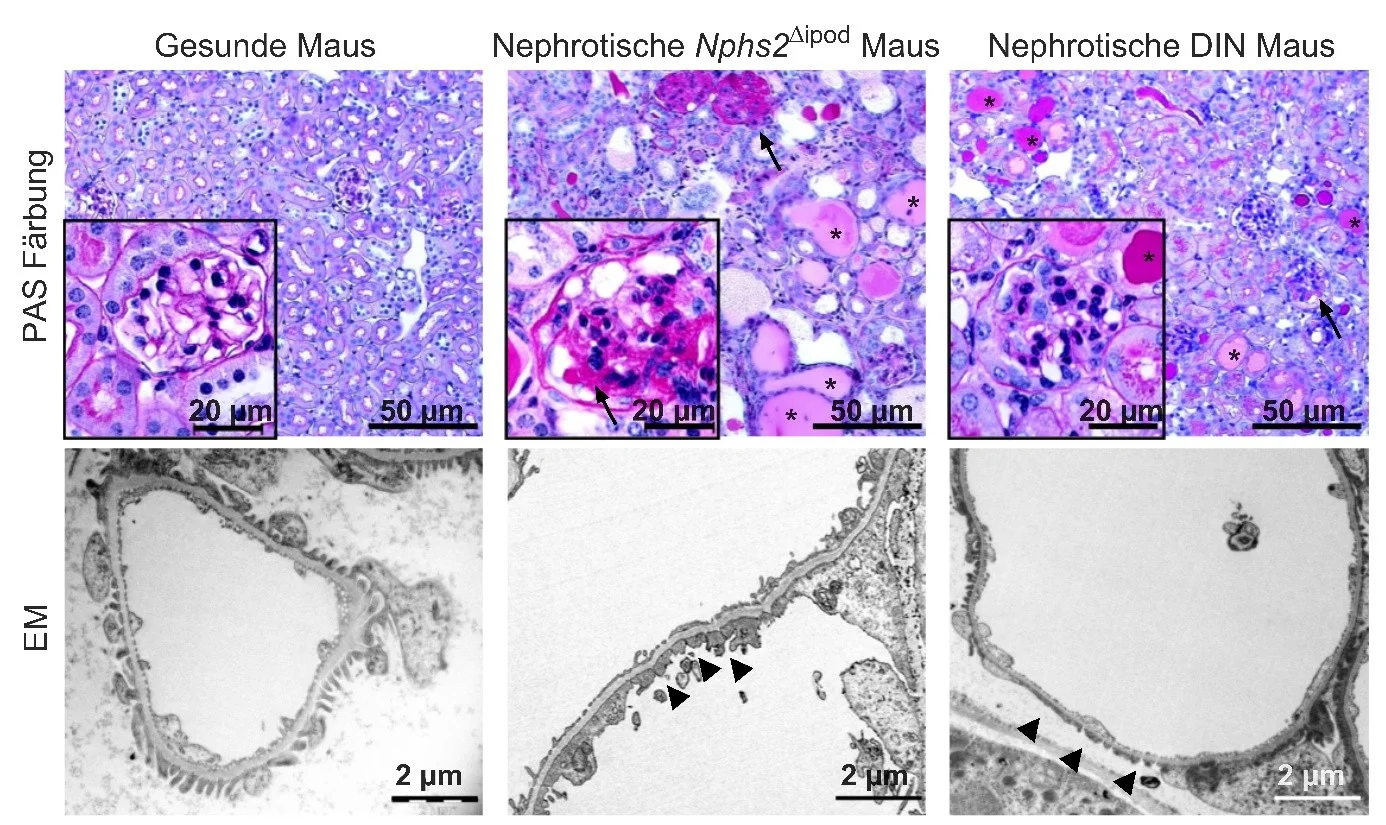
Doxorubicin-induced nephrotic syndrome in mice
Podocin-deficient nephrotic syndrome in mice
Effect of insulin resistance on the induction of proteinuria

Clinical Research:
Differences in Proteasuria Depending on the Underlying Disease
Hemodynamic Parameters in Patients with End-Stage Renal Failure (David König, M.D. candidate)
The Role of Erythrocyte Apoptosis in Renal Anemia (Dr. Rosi Bissinger, cand. med. Cedric Schmidt)
GFR Measurement in Patients with Diabetes Mellitus and Individuals with Prediabetes (Mareike Neumann, M.D. candidate)
Measurement of sodium balance during hemodialysis using the Sodium Management Tool
Related links
Certificates and Associations

Focus: Top National Hospital 2026




Stern: Germany's Outstanding Employers in Nursing 24/25


Quality partnership with the PKV

Family as a success factor

Pension provision for the public sector