Masterstudiengang
Biomedical Technologies
Master of Science (M.Sc.)

Telefonnummer: 07071 29-73676


E-Mail-Adresse: medizintechnik@med.uni-tuebingen.de


Adresse: Geissweg 5/1
72076 Tübingen
Postanschrift


Biomedicine meets Technology

The consecutive Master’s program in Biomedical Technologies at the University of Tübingen spans two academic years, and is run by the Faculty of Medicine in close collaboration with the Faculty of Science. The interdisciplinary approach is characterized by practice-oriented teaching and an international environment, always with the goal to qualify students for an excellent career in the field of biomedical technologies, with a special focus on integrating the areas of biomedical engineering, bioimaging and nanobioanalytics.

Eckdaten zum Studiengang

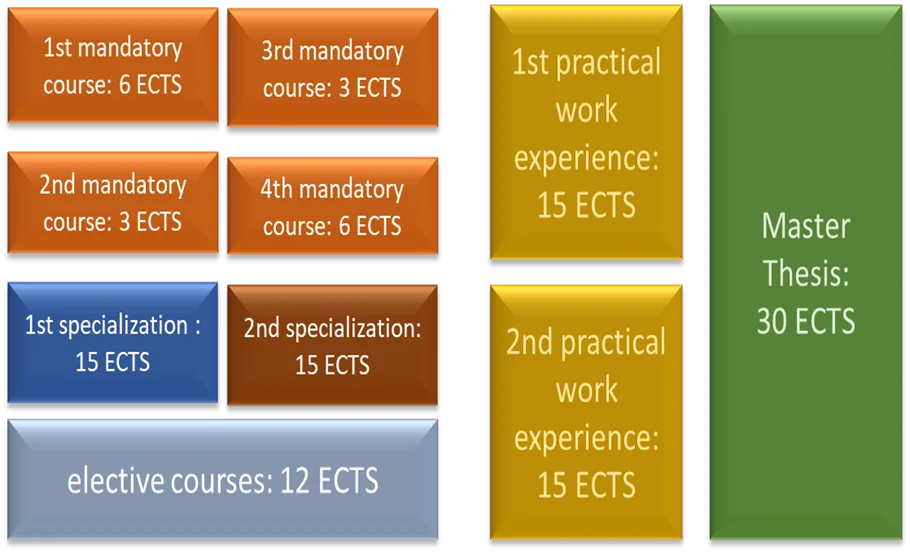
4 semester

full-time study

120 ECTS

24 study places

30. April

application deadline

Insights into the program

Check what our students appreciate in studying Master Biomedical Technologies in Tübingen

Studying in Tübingen

The interprofessional and interdisciplinary master’s degree program in Biomedical Technologies is characterized by practice orientation and internationality.

The master program at the University of Tübingen is an excellent choice for students seeking advanced academic and application-oriented research training in emerging fields of Biomedical Technologies integrating the excellent focus areas of Biomedical Engineering, Bioimaging and NanoBioAnalytics. The trainings are offered by experts in basic as well as clinical sciences and provide a comprehensive overview of the area.

In the first year the students are concentrating on advanced laboratory research training and acquiring broad competences in the field of biomedical technologies, including specific knowledge in the fields of bioimaging, nanobiotechnology and biomedical engineering. Students can also choose from a wide catalog of elective modules allowing the student to tailor the program to their individual interests. 

In the second year two Practical work experiences and Master Thesis Research Project form a major component of the program and entails one year of full-time practical work in the laboratory on three different research projects. In that way the graduates of the master's program train analytical thinking and judgment as well as practical research skills and knowledge. 

Our central goal is to prepare our students for various professional challenges to successfully start a career in future oriented branches of Biomedical Technologies.

In the first year, students can choose two out of three specialization modules (Biomedical Engineering, Bioimaging, NanoBioAnalytics) allowing the students to tailor the program to their individual interests. The second year of the master program is flexibly organized to allow students to gain practical experience in research institutes, industry or abroad.

  • Lectures and modules embedded in a modern technological and medical environment and supported by an interdisciplinary team of internationally well-known and distinguished scientists.
  • Excellent study conditions in small training groups with individual contact to researchers and clinicians.
  • Close interaction with companies and research institutes in Medical Technologies and Biomedical Technologies secures a competence-based study program, practical experiences and the enclosure of researchers from industry in lectures.

Study abroad

Studying abroad during your degree? Here's what you need to know!

Master of Biomedical Technologies offers a mobility window during the 3rd Semester.  During this Semester students are expected to observe two practical work experiences (6 weeks to 3 months each). Practical Work experience could be observed at the university, in the industry or abroad.

Also, the Practical part of the Master Thesis could be done abroad. Master Thesis is a six months’ full-time practical work in an academic or industrial laboratory or abroad on a novel research project.

Contact and further information:

Dr. Elena Lebherz

E-Mail-Adresse: elena.lebherz@med.uni-tuebingen.de

Telefonnummer: +49 7071 29-73676

Students could apply directly by the research institutions or companies of their choice. The Topic of the Internship should be in the framework of the chosen specialization. The practical work experience is graded. The grade is given by a reviewer based on the final report. The Reviewer should be a professor affiliated at the University of Tübingen with the adequate expertise in the practical work experience area.

Master Thesis should be reviewed by two professors affiliated at the University of Tübingen with the adequate experience on the topic.

As the application takes place on individual basis, there is no strong deadline. We advise to start application 6 to 8 months before the expected start of the practical work experience.

Students of the Biomedical Technologies M.Sc. could apply for the Erasmus-/CIVIS Exchange Program. Please apply by the Department of Studies and Teaching (Dr. Elena Lebherz) by the deadline with the following application documents:

  • Letter of motivation (in English, max. 1 page)
  • Curriculum vitae (in English, in tabular form)
  • Proof of extracurricular activities (optional)
  • Transcript of records (including average grade)
  • The selection process is based on the student's grades.
  • It will also be taken into account that the selected candidate will represent the Faculty of Medicine abroad and play a significant role in shaping the future of their successors.

Application Deadline for the next academic year is the 31 of January.

Additionally, to the ERASMUS-Exchange CIVIS offers a wide range of exchange opportunities, like Summer and Winter Schools, BIPS, COILS etc. 


Please find more Information about the Current CIVIS Exchange Opportunities 

The List of the CIVIS- and Erasmus-Partners could be found here.


Studying abroad could be very challenging. But when looking back, you will never regret it. Dare it! Attempto!

A student speaks

„Going to Madrid for the CIVIS BIP at UAM was the highlight of my semester. The mix of short lectures and hands-on work, especially the neuroanatomy lab, made the science click. The visit to the National Museum of Natural Sciences was unforgettable. I left with practical skills and friends I’ll stay in touch with."

Student of Biomedical Technologies, Pariticipant of the BIP, Neurobiology of Mental Disorders at Autonomous University of Madrid, Spain

Lernen am Standort Tübingen

Biomedical Engineering

Students get fundamental overview over in vitro models as alternatives to animal models from the development to regulatory acceptance and use, with their advantages, limitations, and applications, gain insight in the most recently established technologies and basics of microfabrication and additive fabrication; Gain knowledge of ECM (focus on collagen and elastic fibres), properties of biomaterials, cell-ECM interactions

They understand the coupling and interaction between technical implants and tissue, material and bio-compatibility, rejection, knowledge about the passivation of surfaces and technical body parts of all kinds, principles of sensory and motor function

Bioimaging

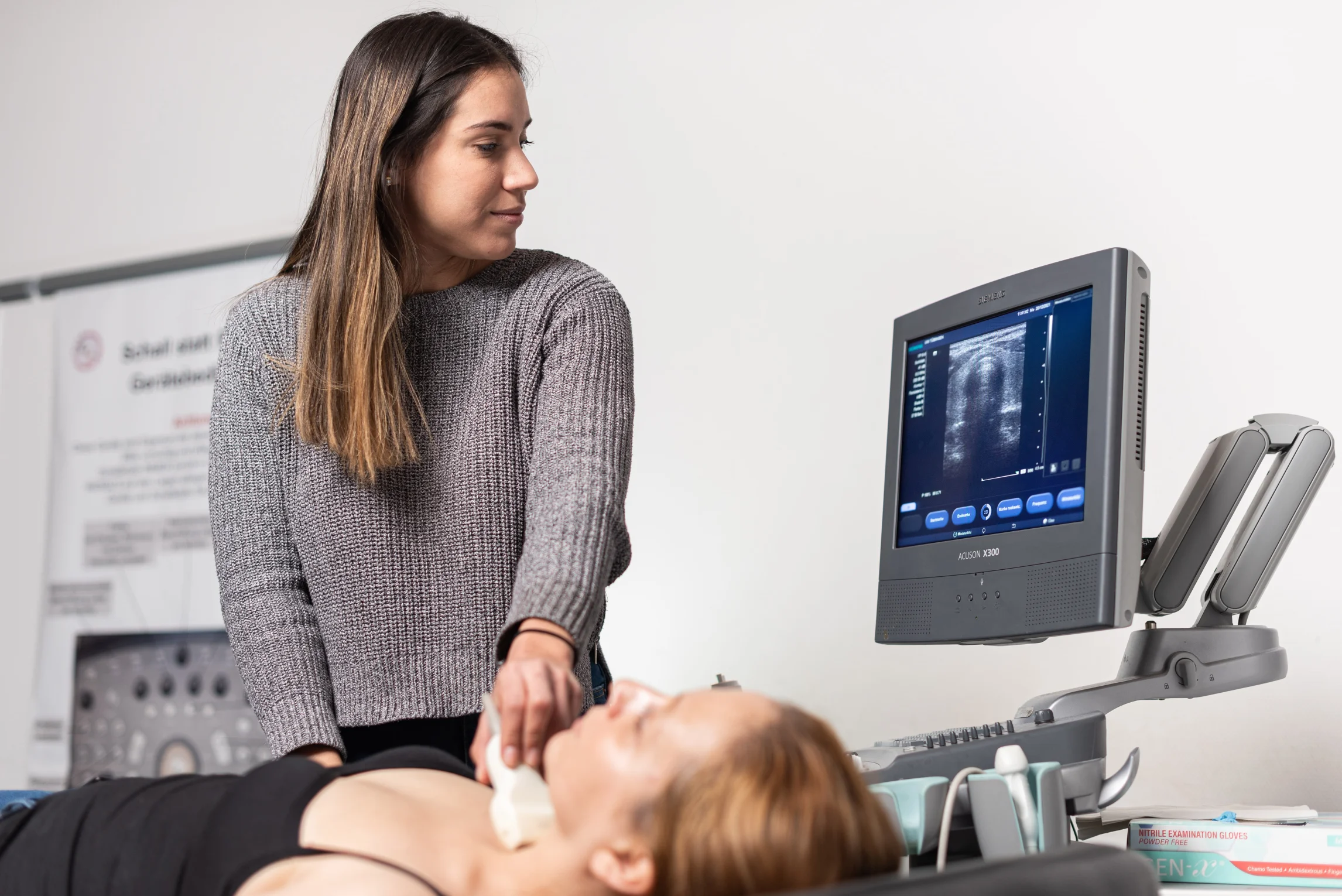
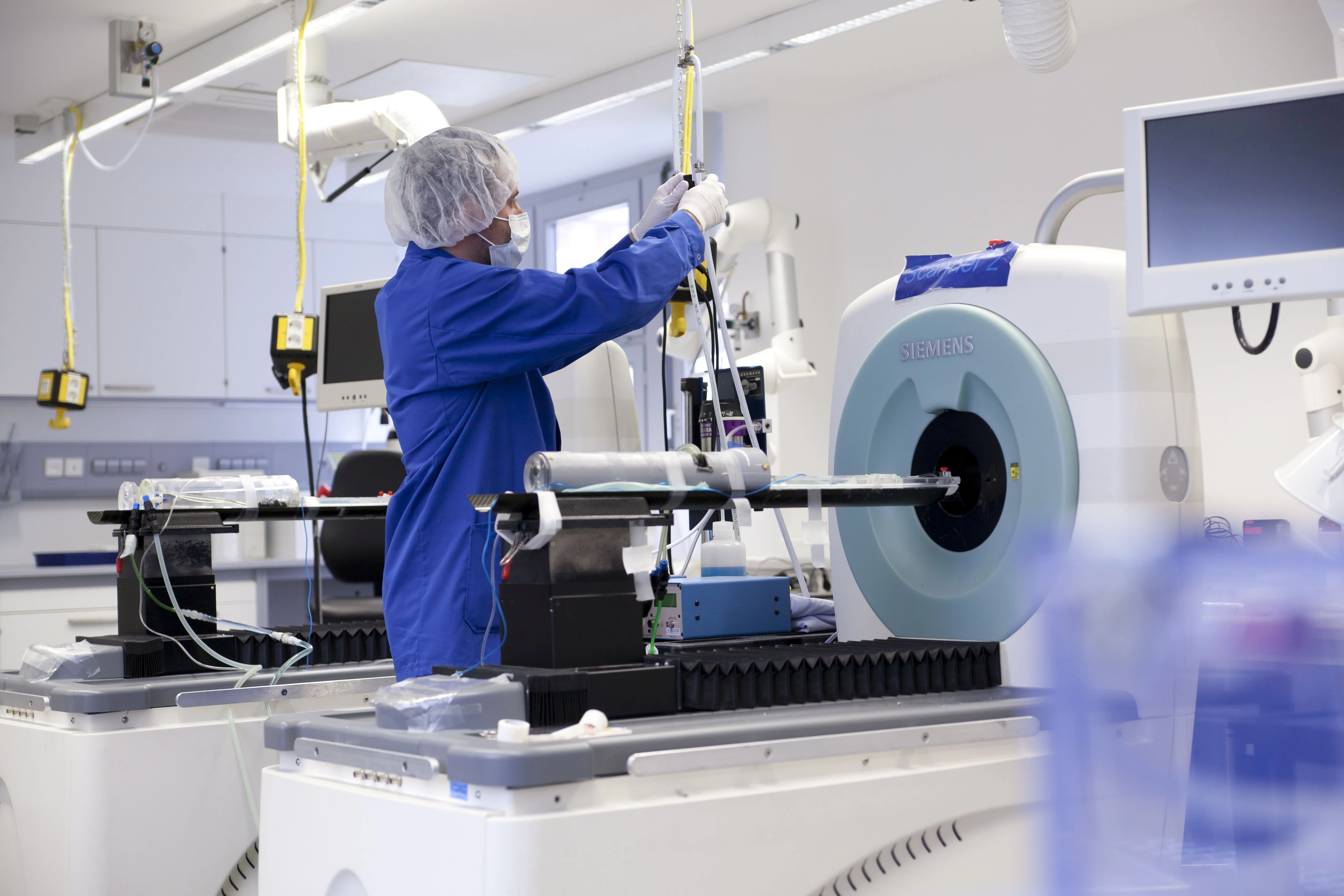
Bioimaging imparts deeper knowledge regarding preclinical imaging and clinical application, i.e. positron-emission tomography (PET), magnetic resonance imaging (MRI), optical imaging (OI), computer tomography (CT), ultrasound (US) and encloses the development of the future generation PET and multimodality imaging equipment.

On the basis of special laboratory techniques different methods of measurement are demonstrated. For clinical application students discuss very special issues on Biomedical Technologies which are illustrated in practical sessions.

NanoBioAnalytics

NanoBioanalytics integrate biological and molecular nanophysics, nanotechnology, biomedical measurement technology, scanning probe microscopy, electron microscopy, nanostructures, nano mechanics, label-free detection methods, scientific instrumentation and devices, transducers, electrical sensing of living cells, chip-based sensors, hard- and software development. On the basis of lectures, seminars and practical work experience students get insights into a very innovative field of research in Biomedical Technologies and acquire a fundamental knowledge on organization of matter. They get to know interdisciplinary methods of approach and discussion and develop the capability to analyze and solve problem definitions.

Conversation with graduates

Female Student

I loved implantology and how it had a practical approach where you can get hands-on experience in biomaterials and tissue engineering. And that's what someone looks for when they have studied the field of biomedical engineering because we are researchers, problem-solvers, who want to attack the problems of the future in medicine to make the world a better place.

Tübingen offers a cultural exchange, knowing people from all around the world, where each one can share their experience and knowledge.  

Also, the old town is beautiful and the sightseeing leaves you mesmerized.

I chose the University of Tübingen because of its prestige and recognition in the field of medicine and several different areas. The university provides a great background, and their eagerness to strive to attack the challenges of the future made me desire to become involved in this master.

Basically, I believe that bioimaging offers challenges in the future in the early detection of pathologies, making an accurate diagnosis and also combating several diseases with the use of combined technologies. And implantology can be used to restore and maintain tissues and organs, providing a better quality of life to people and even increasing their life expectancy. 

Your career prospects

Upon successful completion of the program, graduates may choose to continue their studies by directly pursuing a doctorate in biomedical technologies. Alternatively, you may choose to embark upon a professional career in the design, development, and production of medical devices and instruments for clinical application, biological surfaces for implant materials as well as in the field of tissue engineering and regenerative medicine.

Academic Staff responsible for teaching

Laboratory Techniques and Regulatory Affaires

Biomedical Engineering

Prof. Dr. rer. nat. Peter Loskill

Prof. Dr. rer. nat. Peter Loskill

Director of the Institute of Biomedical Engineering (IBE) | Professor for Organ-on-Chip Research

More information

Personenprofil: Mehr zur Person

Nanobioanalytics

Clinical cases and Consequences for Medical Devices 

Prof. Tilman Schäffer

Professor of Physics and Medical Engineering

Personenprofil: More information

Univ. Prof. Dr. med. Alireza Gharabaghi

Ärztlicher Direktor

Personenprofil: Mehr zur Person

Publikationen: Publikationen

Biomedical Technologies in Diagnostic and Therapy 

Bioimaging

Study Dean

Prof. Dr. rer. nat. Daniela Thorwarth

Prof. Dr. rer. nat. Daniela Thorwarth

Professor of Biomedical Physics

Telefonnummer: 07071 29-86055

E-Mail-Adresse: daniela.thorwarth@med.uni-tuebingen.de

Personenprofil: Mehr zur Person

Do you still have questions?

Do you still have questions about studying?

For further information please contact Study Program Coordinator of Biomedical Technologies M.Sc:

Dr. Elena Lebherz

Telefonnummer: 07071 22985034

E-Mail-Adresse: Elena.lebherz@med.uni-tuebingen.de

Are you interested?

Here you will find a brief overview of all the key information about the program, admission requirements, and application process.

Key facts about the program Apply now