From Tübingen to Tokyo with InfecTT – Part 1
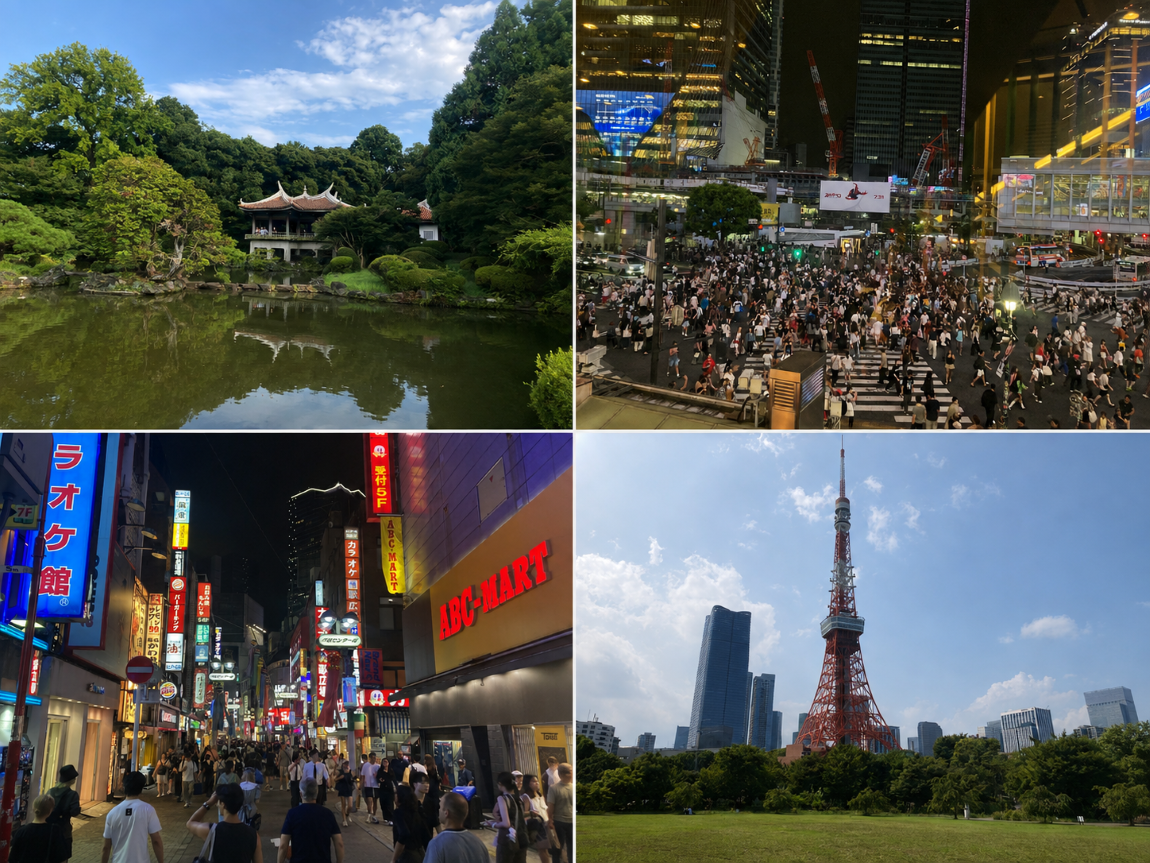
Scientific exchange between Germany and Japan has great potential, but is not yet very well established— and is therefore being promoted starting this year by the InfecTT exchange program, funded by the Baden-Württemberg Foundation. Thus, in the coming years, a total of 12 students from the University of Tübingen can travel to Tokyo for a three-month research exchange, with the sole condition being that it must be in the field of infectious disease research. Conversely, students from Tokyo can also come to Tübingen for lab internships.
Having already completed my medical dissertation in virology in Tübingen, I was very eager to take advantage of this opportunity and received active support from my supervisor, Professor Daniel Sauter. The first step was to find a host laboratory. From a conference in Germany, I already knew a group leader in Tokyo, Professor Kei Sato, who works at the Institute of Medical Science (IMSUT) at the University of Tokyo. Thus, it was already clear to me that I would very much like to join his group for my summer research internship. Professor Sauter put me in touch with him, and as early as February, I had an interview with the group in Tokyo. The acceptance email came a few days later, so there was plenty of time to take care of all the organizational details, kindly supported by the administrative staff in Tokyo. Since German citizens do not need a visa for stays of less than 90 days in Japan, the administrative burden was manageable overall and was limited mainly to providing proof of various insurance documents.
So I finally flew to Tokyo at the end of July, which left me a total of three days to acclimate before the internship began. Tokyo in summer can be quite an extreme experience— with temperatures around 35 degrees and high humidity, I felt as if I had arrived in a tropical climate. But since virtually all buildings (including the lab) naturally have air conditioning, this isn’t a major problem in everyday life. With a population of about 14 million —or 37 million in the metropolitan area—the city itself is many times larger than most European cities. This makes the contrast to tranquil Tübingen all the more striking and not surprisingly, the trip from Narita Airport to the city center takes a good 90 minutes.
Right from the start, I realized that, thanks to my Airbnb booking in the Minato ward, I was fortunately staying in a very central location. Firstly, the IMSUT—and therefore the lab—is located within walking distance, on the other hand, many popular Tokyo neighborhoods are nearby. While almost every part of Tokyo can be reached by subway in under an hour, it’s nice that the city, despite its enormous size, is relatively quiet and also pedestrian-friendly— thanks of course to the excellent traffic management. I spent the few days before my internship began mainly getting a first impression of the city and checking out some of the top destinations right from the start. So I crossed Shibuya Crossing, the busiest intersection in the world, marveled at the skyscrapers, neon signs, and the hustle and bustle in the surrounding streets, strolled through the Imperial Gardens, and visited Tokyo Tower—an almost identical, but colorful replica of the Eiffel Tower.
My first day on the job at the lab came around very quickly. There, I was greeted very warmly by a secretary, and Professor Sato also briefly welcomed me in person before a postdoc explained the lab procedures to me. Already during my first conversations with the staff, I realized once again what I had already heard in reports: The Sato Lab is indeed one of the most renowned virology labs in Japan and is internationally recognized as a leading research group in the field of sarbecovirus research (which also includes coronaviruses). In this context, the lab combines traditional cell culture research with animal experiments and modern bioinformatics methods, thereby pursuing a highly interdisciplinary approach. I am very much looking forward to working here over the next three months...