MASH pathogenesis and therapy: 2 new reviews by the laboratory of AG Heikenwälder in "Nature"
Metabolic dysfunction-associated steatohepatitis (MASH)—formerly known as NASH (non-alcoholic steatohepatitis)—is the progressive, inflammatory form of fatty liver disease (MASLD). It is characterized by hepatic steatosis (fat accumulation) accompanied by inflammation and liver cell injury (ballooning), which drives the development of fibrosis, cirrhosis, and hepatocellular carcinoma. Today, 38% of the World population display liver steatosis and this number is increasing in adults and children continuously – imposing an incredible health burden in the next 2-3 decades.
The global epidemiology of MASH is intimately linked with the rising worldwide epidemics of obesity, type 2 diabetes, and metabolic syndrome.
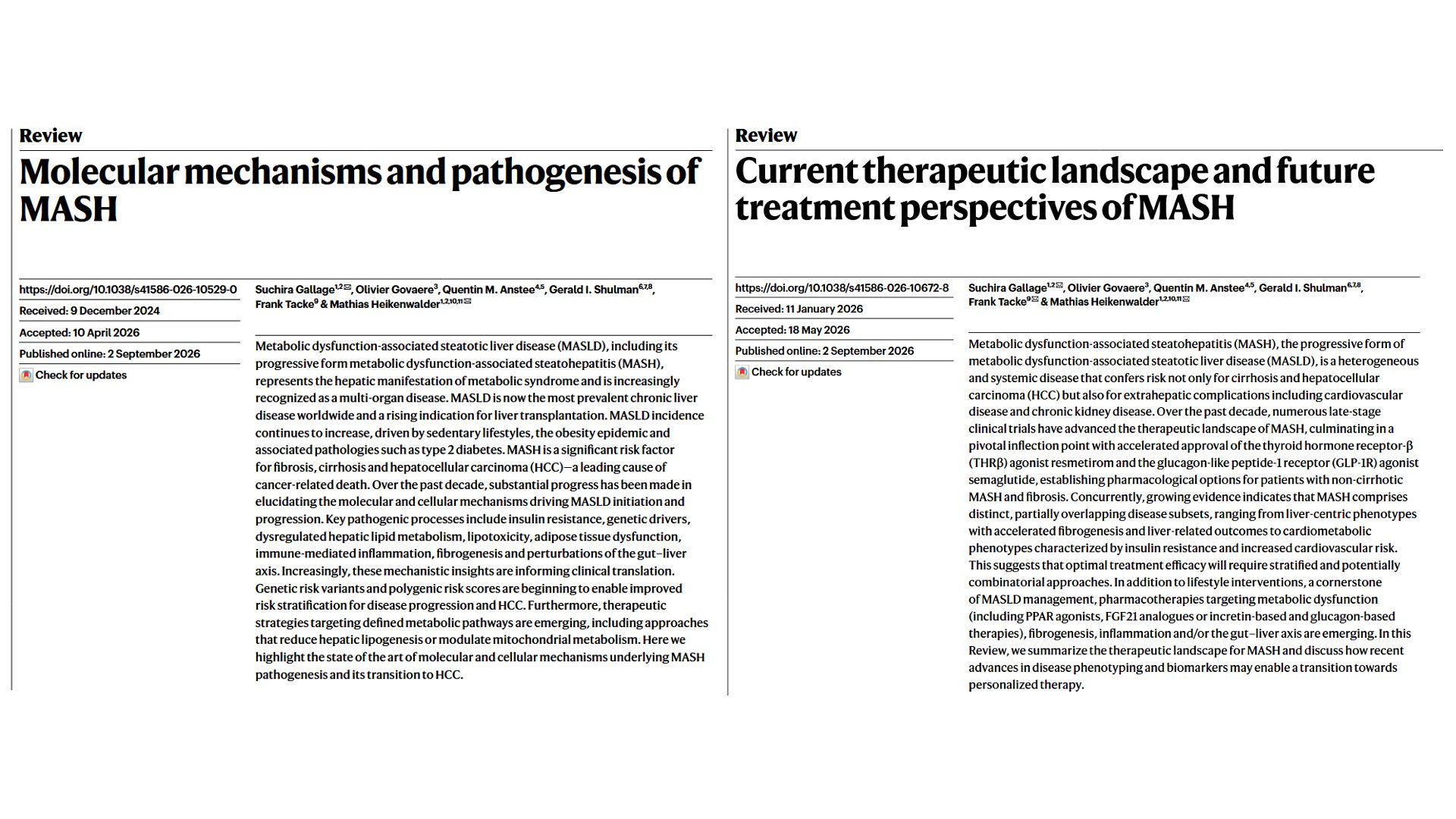
The laboratory of Mathias Heikenwälder has recently summarized the latest knowledge on MASH pathogenesis as well as MASH therapy in 2 reviews in the Journal “Nature”.
https://www.medizin.uni-tuebingen.de/de/das-klinikum/pressemeldungen/meldung/798
Links to the original reviews:
Gallage S. et al. Molecular mechanisms and pathogenesis of MASH. Nature (2026). DOI: 10.1038/s41586-026-10529-0
Gallage S. et al. Current therapeutic landscape and future treatment perspectives of MASH. Nature (2026). DOI: 10.1038/s41586-026-10672-8