New Nature Publication by Prof. Dr. Jan Böttcher
🔬 New Study in Nature: How Dying Cancer Cells Can Suppress the Immune System
How can cancer cells escape the immune system even when they are undergoing cell death?
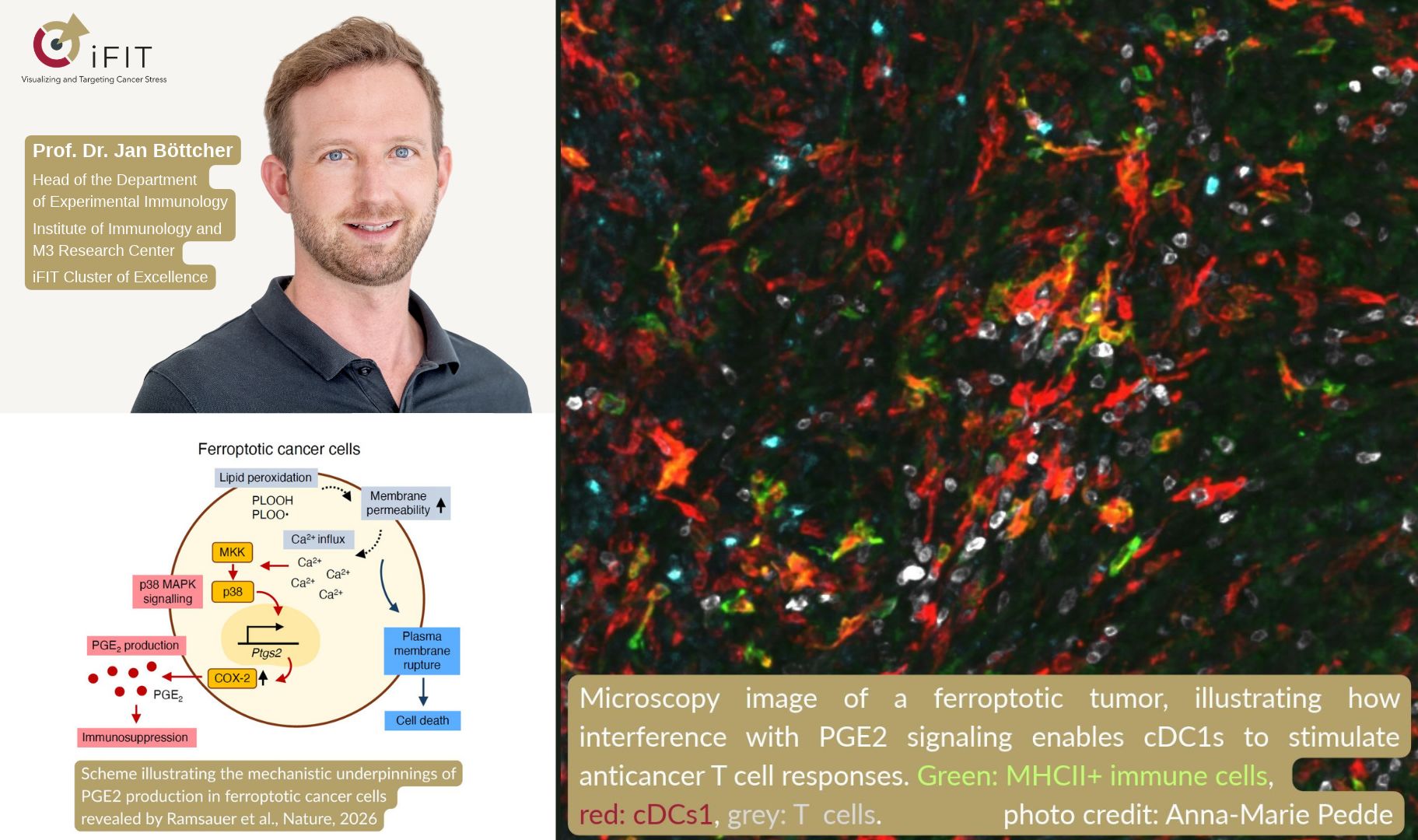
A new study published in the prestigious journal Nature, led by Prof. Dr. Jan Böttcher, senior and corresponding author and member of the iFIT - Cluster of Excellence with Lukas Ramsauer, Institute of Immunology at the Universitätsklinikum Tübingen as first author, reveals a previously unknown mechanism by which dying cancer cells suppress antitumor immune responses.
🧬 Ferroptosis - a promising strategy against cancer
Ferroptosis is a form of cell death driven by excessive lipid peroxidation. Inducing ferroptosis offers a promising therapeutic approach, particularly for cancers that are resistant to existing treatments. However, effective tumor elimination also requires a strong antitumor immune response.
🔍 A surprising discovery: Dying cancer cells can inhibit immune defense
The researchers discovered that cancer cells undergoing ferroptosis activate a molecular pathway that leads to increased production of prostaglandin E2 (PGE2). This molecule suppresses the ability of specialized dendritic cells (cDC1s) to activate tumor-fighting cytotoxic CD8+ T cells, thereby allowing tumors to evade immune surveillance.
💡 Overcoming immune suppression to improve cancer therapy
Importantly, the researchers demonstrated that blocking PGE2 production or signaling restores antitumor T cell responses and enables effective tumor elimination in preclinical models, without interfering with ferroptotic cancer cell death.
🎯 These findings reveal a potential new therapeutic strategy: Combining ferroptosis-inducing treatments with targeted inhibition of PGE2 signaling to strengthen antitumor immunity and improve cancer elimination.
👏 Congratulations to Jan Böttcher and the entire research team on this outstanding publication!
📖 Read the study in Nature: DOI: https://doi.org/10.1038/s41586-026-11333-6 - Ferroptosis in cancer cells triggers PGE2 production for tumour immune escape