Klinik für Kinder- und Jugendmedizin

410
400
330

Address: Hoppe-Seyler-Str. 1
72076 Tübingen


Person profile: 07071 29-83781


Translational Cardiorenal Medicine in Pediatrics

The research group investigates mechanisms and novel therapeutic approaches in children and adolescents with cardiorenal diseases.

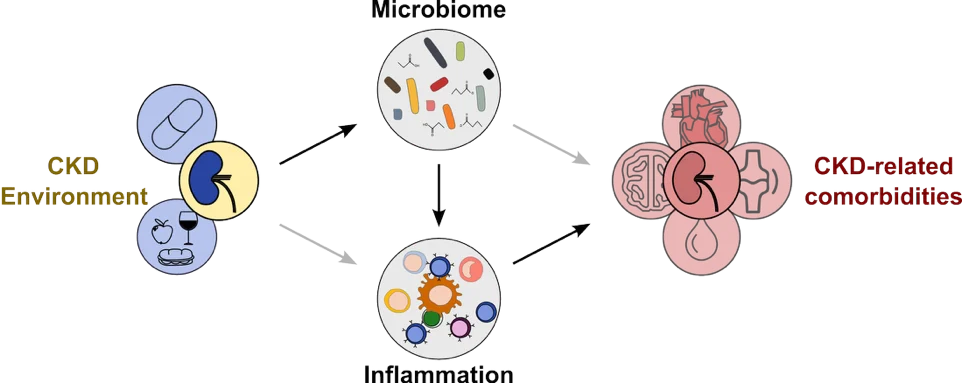
The cardiovascular system and the kidneys exhibit a close interaction and jointly regulate numerous physiological functions. Once one organ system is affected, the other one is commonly impaired as well (cardiorenal syndrome). However, the underlying mechanisms are not yet fully understood. In addition, many chronic diseases manifest during childhood and adolescence and are associated with secondary cardiorenal complications. Chronic inflammation and metabolic alterations play an important role in this context (the so-called cardiovascular-kidney-metabolic syndrome, CVKM).

We investigate the interaction between the gut microbiome and the immune system as a key modulator of chronic inflammatory processes that influence the progression of cardiorenal disease. In addition to primary renal disease, e.g. chronic kidney disease (CKD), our focus includes children at high risk of secondary disease, such as pediatric childhood cancer survivors or patients after solid organ transplantation. Furthermore, the gut microbiome plays an important role in the context of organ rejection after transplantation, particularly through its interaction with regulatory T cells.

Lead

PD Dr. med. Johannes Holle

frontend.sr-only_#{element.icon}: +49 7071 29-62356


E-mail address: johannes.holle@med.uni-tuebingen.de


The main objectives of our research group

Microbiome–
immune axis

to improve the understanding of the central role of the microbiome–immune axis as a risk factor for cardiorenal disease in childhood and adolescence, as well as after organ transplantation

Early detection of
cardiorenal disease

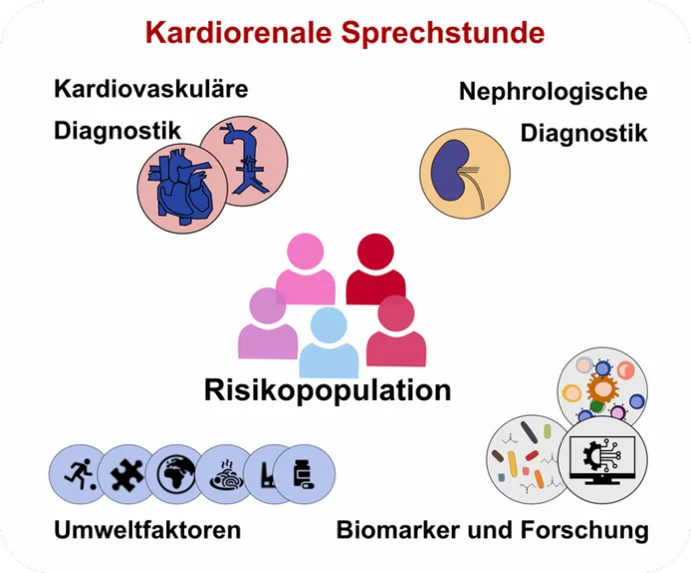
to enhance and standardize interdisciplinary diagnostics for the early detection of cardiorenal disease in children and adolescents (clinical integration: cardiorenal outpatient clinic)

Identification of
new therapies

to identify therapeutic approaches aimed at slowing the progression of cardiorenal disease and to evaluate these approaches in preclinical and clinical studies

Personalized
interventions

to develop personalized interventions for the effective prevention and treatment of cardiorenal disease in childhood and adolescence, taking into account established medications (off-label use), innovative anti-inflammatory therapies (drug repurposing), and holistic treatment strategies (lifestyle modification)

Projects

Recent projects

We investigate the interaction between the gut microbiome and the immune system (microbiome–immune axis) in the context of chronic kidney disease (CKD) (NCT04976010). To characterize human cohorts, we collaborate with our partners using advanced technologies for the analysis of the gut microbiome (whole genome sequencing), the metabolome (mass spectrometry), and the immune phenotype (flow cytometry, single-cell RNA sequencing). Our focus is on key inflammatory mechanisms, particularly AhR-dependent inflammation, Th17 cells, regulatory T cells, and myeloid-derived suppressor cells. 

Using a reverse translational approach, we employ in vitro models (suppression assays) and animal models (CKD models, germ-free mice, microbiome-humanized mice) to better understand causal relationships and to validate therapeutic approaches in preclinical studies.

Short-chain fatty acids play a central role in the function of regulatory T cells, which are reduced in patients with chronic kidney disease (CKD). In a human, placebo-controlled exploratory study, we are supplementing the short-chain fatty acid propionate in children and adolescents undergoing hemodialysis. The primary objective of this intervention is to normalize the number and function of regulatory T cells (NCT05858437, NCT06198374).

Children and adolescents after oncological disease are at increased risk of developing cardiovascular and renal long-term complications. In addition to therapy-associated toxicity, we investigate the potential impact of alterations in the gut microbiome and the immune system on the progression of cardiorenal disease. Patients are prospectively recruited following completion of oncological treatment and are regularly seen in our interdisciplinary cardiorenal outpatient clinic, where they are assessed for early signs of cardiorenal disease. A particular focus of our research is the influence of environmental factors on the microbiome–immune axis.

In collaboration with the transplant cohort of the German Center for Infection Research (DZIF) (DZIF Transplant Cohort), we investigate the influence of the gut microbiome on immunological changes associated with transplant rejection. 

We have demonstrated that a reduced capacity of the gut microbiome to synthesize short-chain fatty acids is associated with an increased risk of graft rejection. In addition to characterizing the immunological consequences, we focus on causal mechanisms of microbiome–immune interactions by using germ-free mice colonized with the gut microbiome of kidney transplant recipients (with and without rejection), in collaboration with Nicola Wilck (Berlin).

Methods and platforms

  • Central platform for the recruitment of children and adolescents, with a focus on comprehensive clinical (cardiovascular and renal) phenotyping and biobanking (particularly immune cells and stool samples) (Ethics Approval 483/2025BO1)
  • Established workflows for multi-omics analyses (including proteomics, single-cell immune profiling, and microbiome sequencing) of the microbiome–immune axis, including bioinformatics support
  • Microbiome-humanized animal models (germ-free mice, gnotobiotic mice, fecal microbiome transfer) in cooperation with the Wilck lab
  • CKD and transplantation animal models (e.g. subtotal nephrectomy, skin transplantation) subtotale Nephrektomie, Hauttransplantation) in cooperation with the Wilck lab

Clinical Association

Clinical Association

    Pediatric Nephrology (Prof. Dr. med. Marcus Weitz; UKT Tübingen, Kinderheilkunde I, komm. Ärztlicher Direktor: Prof. Dr. Hendrik Rosewich)

    Pediatric Cardiology (Prof. Dr. med. Johannes Nordmeyer, UKT Tübingen)

Scientific Networks

  • European Study Consortium for Chronic Kidney Disorders Affecting Pediatric Patients (https://www.escapenet.eu)
  • Investigating health-to-disease transition using a multi-omics approach focusing on inflammation and existing cohorts of healthy and diseased patients (https://www.immediate-project.eu)

Cooperations

  • PD Dr. Nicola Wilck (Charité – Universitätsmedizin Berlin, https://www.mdc-berlin.de/de/wilck#t-profil)
  • Dr. med. Hendrik Bartolomaeus (Würzburg)
  • Prof. Dr. Dominik Müller (Charité – Universitätsmedizin Berlin)
  • Dr. Sofia Forslund (ECRC, MDC, Campus Buch)
  • Prof. Dr. Johannes Stegbauer (Nephrology, University Hospital of Düsseldorf)
  • Prof. Dr. Jun Oh (Pediatric Nephrology, EKU Hamburg)
  • Prof. Dr. Lars Pape (Pediatric Nephrology, University Hospital of Essen)
  • Prof. Dr. Franz Schaefer, Prof. Dr. Claus Peter Schmitt (Pediatric Nephrology, University Hospital of Heidelberg)
  • Prof. Dr. Lutz Weber (Pediatric Nephrology, University Hospital of Köln)
  • Dr. Anne Dueck (DZHK, TU München)
  • Prof. Dr. Dominik N. Müller (ECRC, MDC, Campus Buch)
  • Prof. Dr. Laetitia Koppe (Lyon, France)
  • Prof. Dr. Markus Gerhard (DZIF, TU München)
  • Prof. Dr. Till Strowig (HZI Braunschweig, DZIF)
  • Prof. Dr. Joseph Alge (Baylor College of Medicine, Houston, Texas)