Interview with Annika Nelde about Women in Science Day 2022
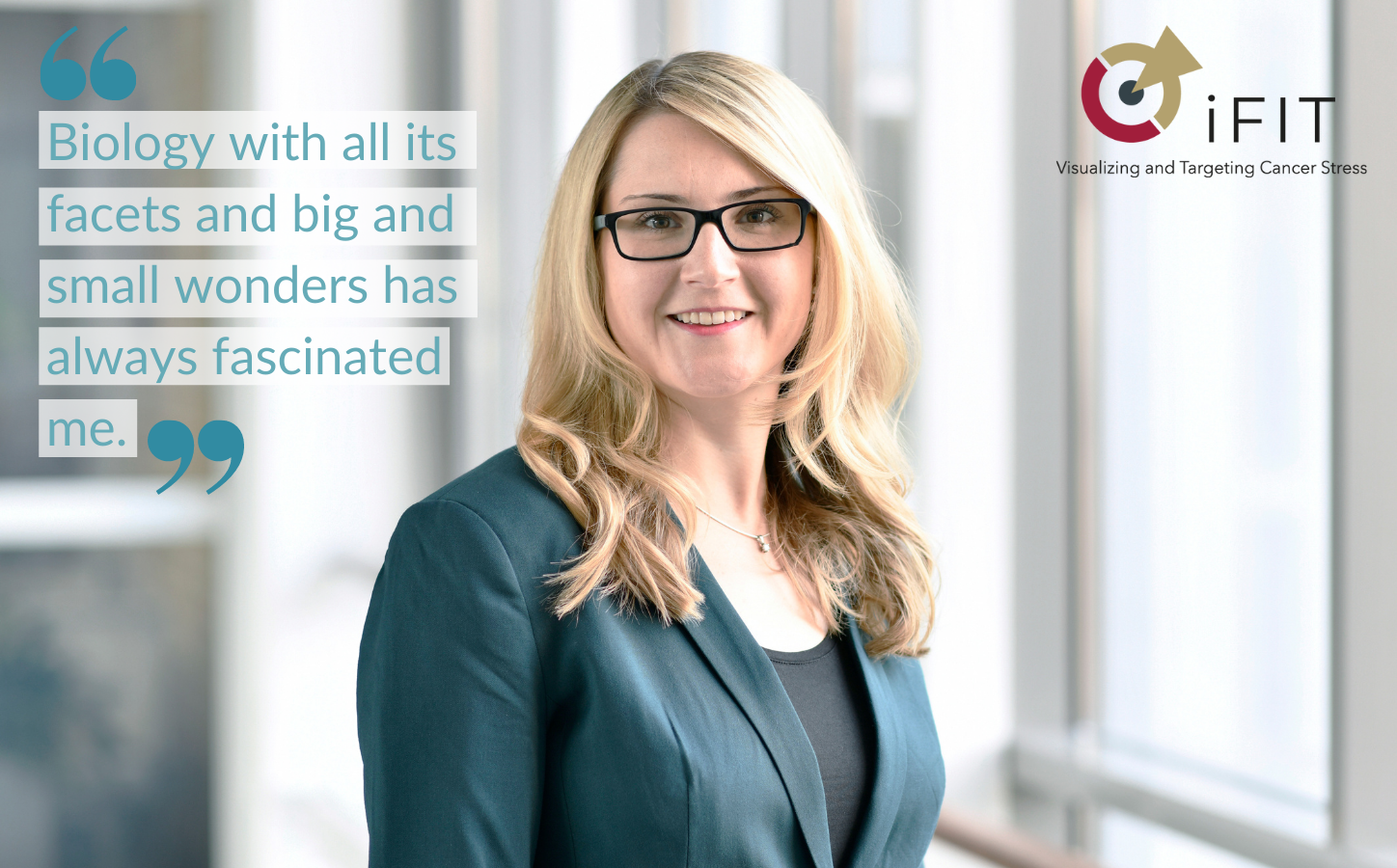
Biology captivated Dr. Annika Nelde from an early age. She was particularly interested in the adaptability of the animal and plant world to its environment and how evolution could create such biodiversity. As a postdoc, she is conducting research in the iFIT Cluster of Excellence on new immunotherapy approaches for cancer and infectious diseases. As a woman who is still relatively at the beginning of her professional career in the natural sciences, on the occasion of the International Day for Girls and Women in Science, we asked her how she found her way into science and what she would like to see in the future for the advancement of women in science.
1. What made you decide to pursue a career in the natural sciences?
Biology with all its facets and big and small wonders has always fascinated me, whether in the animal or plant world. I found it particularly exciting, for example, what possibilities and adaptations animals and plants can use to survive in certain places, or how evolution was able to produce such a wide variety of species. My biology teacher in high school introduced us to this wonderful world with so much joy that it quickly became clear to me that I wanted to study biology.
2. In what ways do you think your career can be a role model for girls who are thinking of going into science?
I think it's important that everyone - whether a girl or boy - pursue the education or degree that she or he enjoys the most. Regardless of gender or desire to have children later. There are so many ways and possibilities to shape one's professional and private life that the decision for or against natural sciences should not stand in the way. Even today, I still think a lot about how my path will develop in the coming years. But more often you should just do it without planning the next 10 years. In the end it comes differently anyway. Which is a good thing.
3. Did you have a role model or role models?
No, not really. I'm always happy to see the possibilities and ideas that others have for shaping their own path.
4. What advice would you give to girls if they want to pursue a career in science?
Definitely go for it! The advice I would give is to inform yourself very well about the different courses of study. There are not only the "classics" biology, chemistry and physics, but so many gradations and other scientific courses. At the time, I probably wouldn't have known exactly which specific direction I wanted to go in. I only made this decision in the course of my biology studies. But in the end, it may not be so important whether you studied molecular medicine, biology or biochemistry, since many professions require a scientific degree, but rarely this very specific one. In our lab, too, people from a wide variety of backgrounds work together on the same projects and tasks.
5. What would you like to see in the future for the advancement of women in science?
I would like to see more opportunities created for permanent scientific positions alongside professorships. The often short fixed-term contracts are a particular burden on women who want to have children and often force them to return to work very quickly after the birth of a child.
The interview was conducted by Steven Pohl
Dr. Annika Nelde conducts research on new immunotherapy approaches for cancer and infectious diseases. (Images: Steven Pohl)
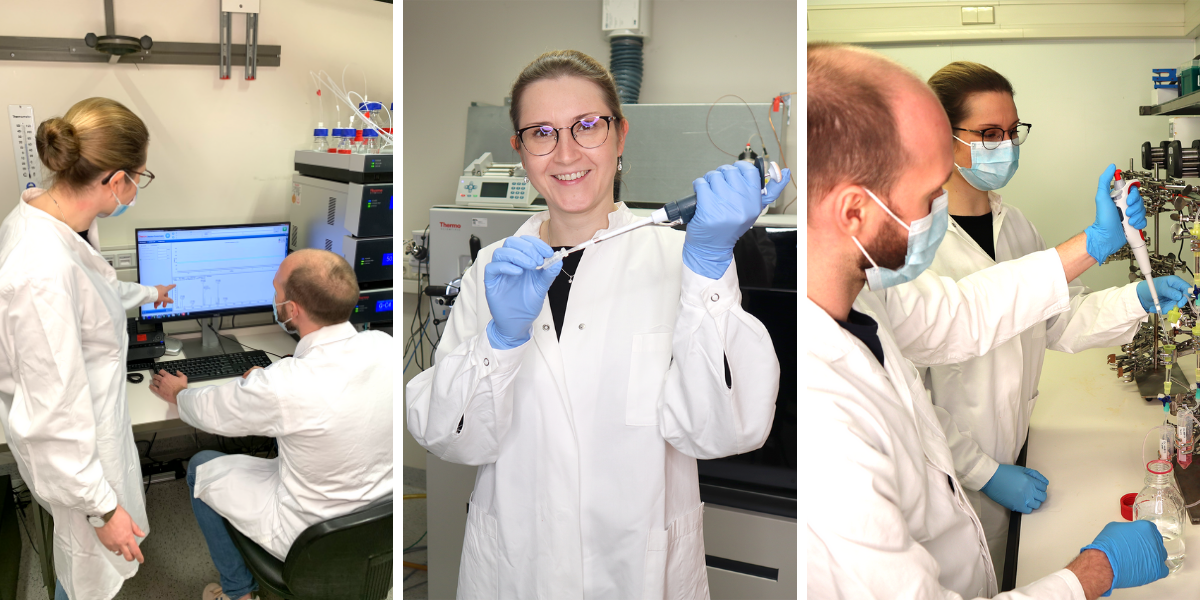
About Dr. Annika Nelde:
Position: postdoc in the research group of Apl. Prof. Dr. Juliane Walz in the KKE Translational Immunology at the University Hospital Tübingen and member of the iFIT Cluster of Excellence.
Research focus: Development of T-cell based immunotherapy approaches in cancer and infectious diseases
Age: 32
Studies: Studies of Biology (B.Sc.) and Molecular Cell Biology and Immunology (M.Sc.) at the University of Tübingen from 2009 - 2014
Professional background: PhD in Biology at the Institute of Immunology, University of Tübingen from 2015 - 2020, since 2020 postdoc in the research group of Apl. Prof. Dr. Juliane Walz in the KKE Translational Immunology at the University Hospital Tübingen.