Interview with Katja Schenke-Layland on Women in Science Day 2022
Prof. Dr. Katja Schenke-Layland had actually wanted to become a veterinarian since childhood and had already helped out in the veterinary practice of a friend in her hometown during her school years. Tragically, however, it was to turn out that her future little patients were the very ones who ever dashed her dream. Schenke-Layland developed an allergy to cat dander, and so, without further ado, she decided to go with Plan B. Now 44, she holds three important positions at once: She is director of the Natural and Medical Sciences Institute in Reutlingen, professor of medical technology and regenerative medicine at the Institute of Biomedical Engineering in the Medical Faculty, and research group leader in the iFIT Excellence Cluster. So her Plan B to pursue a career in the natural sciences has more than paid off. On the occasion of the International Day for Women and Girls in Science, we interviewed Katja Schenke-Layland and asked her what motivated her to pursue an academic career and what advice she can give to young women who, like her, faced the same groundbreaking decision back then.
1. What made you decide to pursue a career in the natural sciences?
I always wanted to be a veterinarian when I was a child. That was my dream job at the time. While I was still in school, I started helping out at a friend's house who had opened a veterinary practice in my hometown. That was already from the 8th grade. From the end of school during the 11th and 12th grade, however, came the turn. At that time I thought I always had a cold, but it turned out that I had developed an allergy to cat hair. Nevertheless, I applied for a place to study veterinary medicine in Leipzig and there I was offered interviews including allergy tests, since these occupational disabilities had already accumulated at that time. Unfortunately, I was finally diagnosed with an allergy to cat hair and other sensitivities to other animal hair. That was the end of the dream for the time being. Then I looked for alternatives in the closer environment, because I didn't want to study too far from my parents' house, and I came across a then new master's degree program in Jena, which offered the possibility to choose three subjects. That's why I have the somewhat unusual constellation of biology, sociology and psychology in my degree. Beyond that, there were no application deadlines and no other restrictions, so I was able to enroll relatively easily without having to wait another year. So that was actually Plan B of how I came to study the natural sciences, and it quickly became apparent that my heart beat more for the natural sciences, i.e. biology and especially biomedicine, than for sociology and psychology. I even toyed with the idea of studying medicine after my master's degree and had already done my nursing internship at the hospital in Jena. My future doctoral supervisor from cardiac surgery said that I didn't necessarily have to study medicine to help people. With a PhD in biology with a focus on biomedicine, he said, I could also make an important contribution to people's health.
2. In what ways do you think your career can be a role model for girls who are thinking of going into science?
It is helpful for one to see themselves in others. So for a girl, it may be easier to see herself in a woman than in a man. I think if you have a woman in a certain position, then she sees that it's possible, it's doable, and if I know the steps of how to get there, then it's absolutely within the realm of possibility for me to get there later. I think that at least opens up the thought processes because I very often meet female students who, at the bachelor's and master's level, still have no idea where they want to go later. When I then approach them about an academic career, for example a doctorate, most of them react very reservedly along the lines of "Me and a doctorate, I don't think I can do that!". I had exactly the same initial reaction back then when my doctoral advisor suggested it to me. I think it's especially helpful to have someone where you can see that they thought the same thing, were in the same situation, and still became a professor today, and that's where I can go. Such a role model can be a support in the decision-making process.
3. Did you have a role model or role models?
Yes, first of all the veterinarian in my hometown. That was the very first one who inspired me to continue and gave me the belief that one day I would make it there myself. But there was not only one role model, but several, and these were not prominent personalities of contemporary history, but rather those with whom I was directly involved, i.e. the veterinarian, my doctoral supervisor, and in my career so far people with and for whom I have worked, and who have impressed me and shown me my way. In terms of my early scientific career, as I mentioned before, first of all there was my PhD supervisor, Ulrich Stock, who encouraged me at that time to do my PhD and gave me the message that I have to believe in myself and my abilities. But also during my time in the USA as a postdoc and later assistant professor at UCLA, my boss at the time, Robb MacLellan, a cardiologist, encouraged me. But of course I also had female role models, for example my colleague at the time, Hanna Mikkola, with whom I still work very closely today. At that time, she was further advanced in her career than I was and was therefore able to give me very good advice regarding academic careers. That was enormously helpful to exchange ideas with her.
4. What advice would you give to girls who want to pursue a career in science?
I had a conversation just this morning with a student who is writing her master's thesis and is still very unsure about her future career. A doctoral thesis did not seem to be an option. Sometimes a possible reason for the above-average respect for an academic career is also due to the fact that parents do not have an academic background and thus cannot give the same advice as a person who has already climbed the various stages of an academic career. That's how it was for me, too. Then an academic career option is mentally far away. That's why I advised the student in depth, but at the same time suggested that she look for someone who is also working in the lab, but maybe one or two steps further along than she is, to get advice as well. However, it is also important to have passion for what you are doing. You have to burn for it and develop a passion because a career in science is not necessarily the easiest job. For me, for example, it's the job of my dreams. And that's the crucial point. If I'm on fire for it and can realize myself, with the research, the teaching and the whole academic career within the natural sciences, then you're really in a good place. Of course, this is true for all jobs in general, but it is especially true for ours because we don't have a typical 9 to 5 job.
5. What would you like to see in the future for the advancement of women in science?
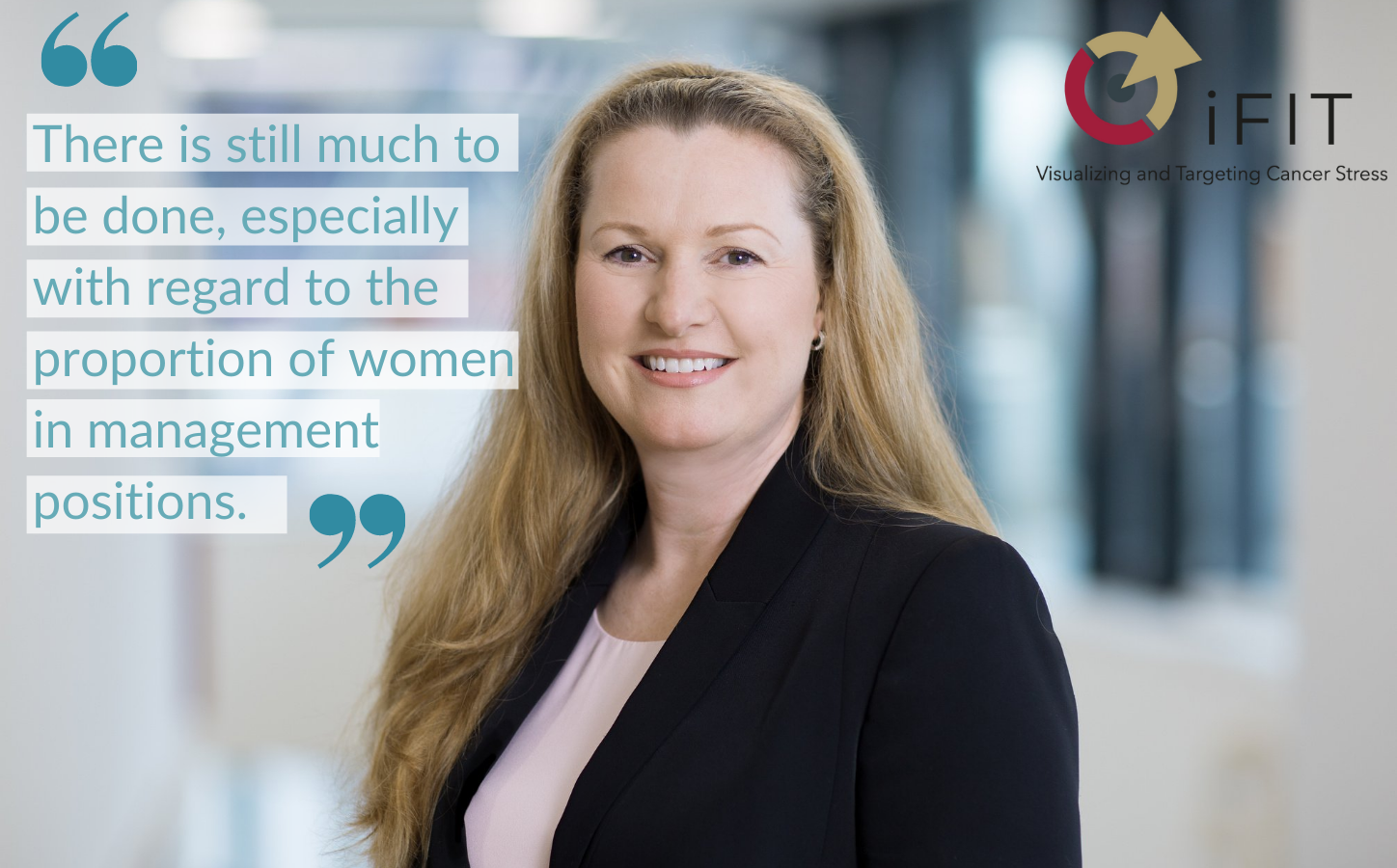
Over the last decade, we can see from the figures that Germany has managed to inspire more and more women to venture into science. This is already a good direction that we have taken, especially in terms of setting the course in politics, and this path must be consistently continued. There is still a lot to do, especially with regard to the proportion of women in management positions. One thorny issue here is the women's quota. On the one hand, this opens the doors and leads to an increase in the proportion of women in certain positions in the medium and long term, as can be seen very well in the example of the USA. On the other hand, we women share the feeling that "I want to get the job because I am qualified for it, and not primarily because there is a quota". I myself was also asked once at an event on the topic of equality in a panel discussion (by a moderator!) whether I owe my job to the women's quota. What definitely needs to be done further is to promote the compatibility of career and family. Here, above all, flexible working hours, dual career services, and expanded childcare offerings for male and female researchers, which, for example, allow for care outside of core working hours, are important tools for universities and colleges. I know this topic is also very important to the Dean of the Faculty of Medicine, Bernd Pichler.
The interview was conducted by Steven Pohl
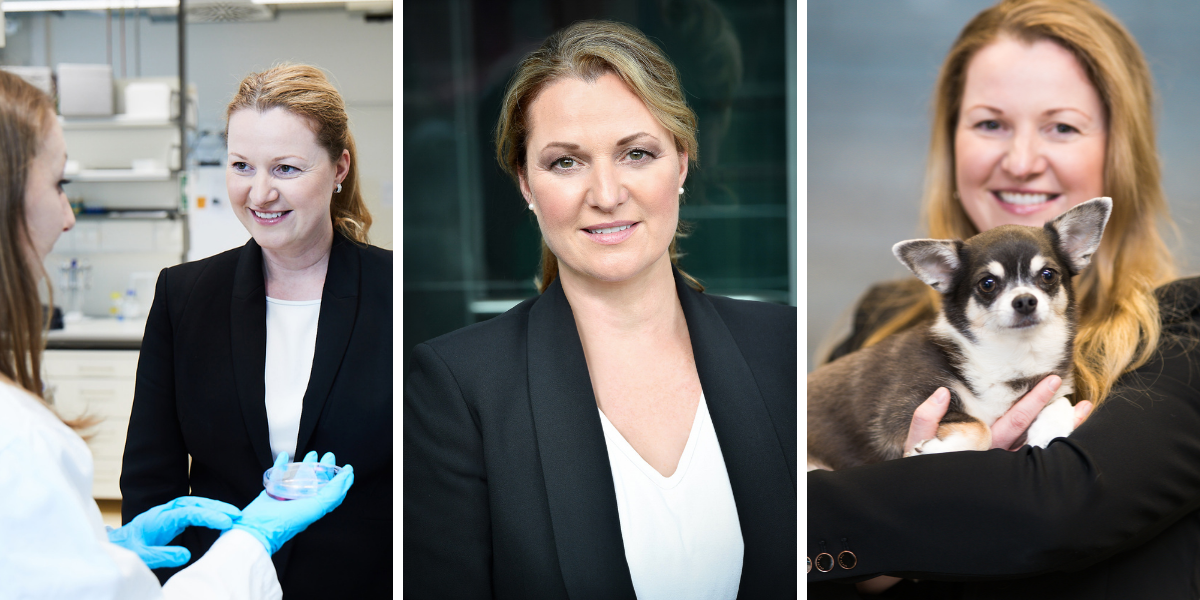
With no less than three senior positions as director, professor and research group leader, Prof. Dr. Schenke-Layland bears a lot of responsibility, but her heart continues to beat for animals. (Images: Jessica Wahl)
About Prof. Dr. Katja Schenke-Layland:
Position: director and foundation chairman of the NMI Natural and Medical Sciences Institute in Reutlingen, professor of medical engineering and regenerative medicine at the Institute of Biomedical Engineering of the Medical Faculty, and research group leader (PI) in the iFIT Cluster of Excellence.
Research focus: Stem cell and extracellular matrix biology, tissue engineering, development of marker-independent analytical methods for cells, tissues and materials
Age: 44 years
Studies: 1995 - 2000 Master's degree in Biology, Sociology and Psychology at the Friedrich-Schiller-University Jena; 2001 - 2004 Dissertation Dr. rer. nat. in Biology at the Friedrich-Schiller-University Jena
Professional career: https://www.nmi.de/de/ueber-uns/menschen/detail/prof-dr-katja-schenke-layland/