Japanese-German exchange
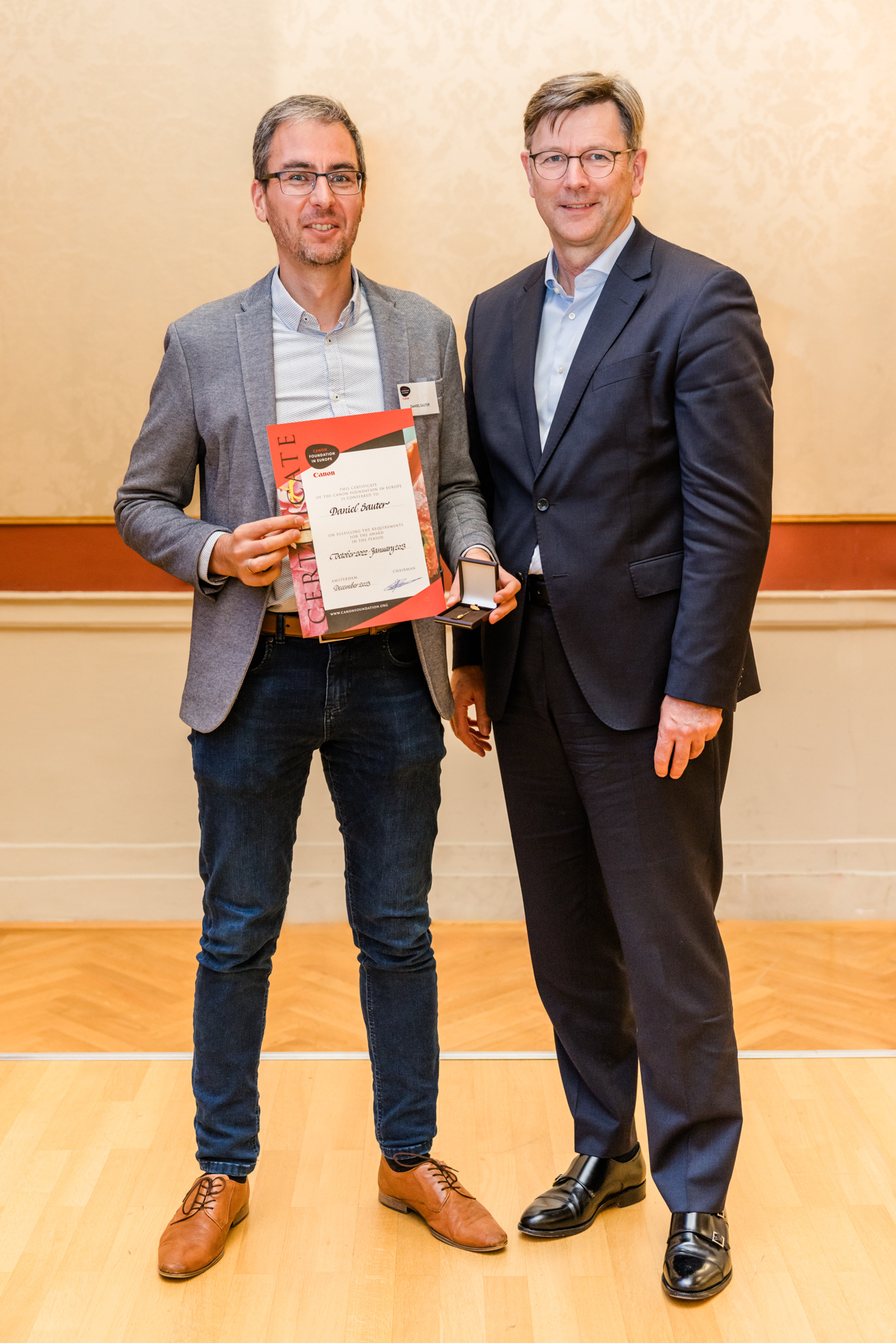
What strategies does SARS-CoV-2 use to switch off the immune system? How does SARS-CoV-2 adapt to humans? How do mutations affect the spread of the virus in the population? With these questions in mind, Prof Daniel Sauter travelled to Tokyo in October 2022, where he completed a three-month visiting professorship in the laboratory of Prof Kei Sato. During his stay, Prof Sauter and his host were able to gain important insights into the suppression of the immune response by coronaviruses. For example, cryptic reading frames coding for small viral proteins were identified in the genome of SARS-CoV-2. Two of these proteins, ORF3b and ORF3c, inhibit the production of interferons, thereby facilitating the spread of SARS-CoV-2 in the body. The results of these studies have been published here and here. In addition to important insights into the biology of coronaviruses, virological methods and experimental approaches were also exchanged between the laboratories. For example, the so-called cyclic circular polymerase extension reaction (CPER) was established in Tübingen thanks to the Japanese-German collaboration. This PCR-based method enables the rapid and targeted insertion of changes into the genome of SARS-CoV-2 and other viruses.
We would like to congratulate Prof Sauter once again on his grant and thank the Canon Foundation in Europe, Prof Sato and his research group, as well as the Institute for Medical Sciences at the University of Tokyo for their support!
Picture: Canon Foundation alumni meeting in Vienna in December 2023. Prof D. Sauter (left) receives his fellowship certificate.