Joint Microbiology Colloquium highlights advances in phage research
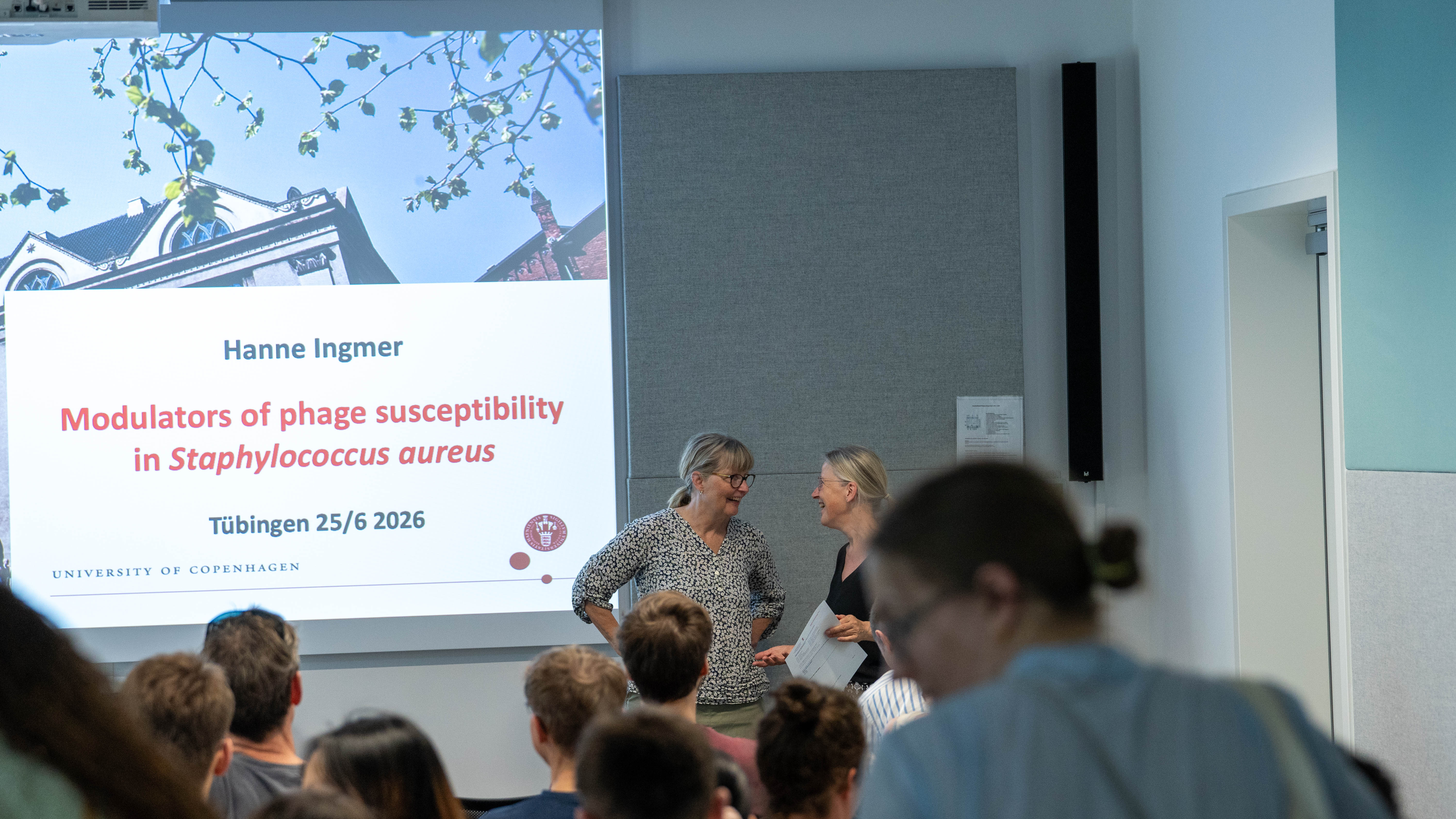
On 25 June 2026, researchers, students and guests gathered at the M3 Research Center in Tübingen for the latest Joint Microbiology Colloquium, hosted by the Cluster of Excellence Controlling Microbes to Fight Infections (CMFI). The event featured an invited lecture by Prof. Hanne Ingmer from the University of Copenhagen, followed by a flash talk from Dr. Maik Wolfram-Schauerte (CMFI), providing attendees with new insights into bacteriophage biology and its potential for combating antimicrobial resistance.
Prof. Ingmer, a leading researcher at the University of Copenhagen, focuses her work on tackling antimicrobial resistance, especially in the notorious pathogen Staphylococcus aureus. In her keynote lecture, titled “Modulators of phage susceptibility in Staphylococcus aureus”, she discussed how phage effectiveness against this pathogen depends on both the phage and the bacterial state. Her research at the intersection of antibiotic resistance and phage biology reveals how bacterial gene regulation and community context shape phage susceptibility. These findings emphasize the need for precise clinical conditions when developing phage therapies, potentially paving the way for more effective treatments against antibiotic-resistant infections.
The colloquium also featured a flash talk by Dr. Maik Wolfram-Schauerte (CMFI), titled “The PhageExpressionAtlas reveals time-resolved phage–host transcriptional dynamics”. Dr. Wolfram-Schauerte introduced the PhageExpressionAtlas, an innovative resource that uses dual RNA sequencing to map gene expression in both phages and their bacterial hosts over time. By allowing scientists to observe how both phage and host respond during infection, the atlas offers crucial insights into transcriptional dynamics. This tool promises to advance phage research, informing both basic science and future therapies.
The event concluded with a lively scientific discussion and an informal reception, offering participants the opportunity to exchange ideas and strengthen collaborations within the microbiology community. We thank the organizers for the realisation of this successful event and are looking forward to the next part of the Joint Microbiology Colloquium soon!