Prof. Dr. Mathias Heikenwälder presented "Novel Concepts of Combinatorial Liver Cancer Therapies" at the 2026 SLAM in Cape Coral
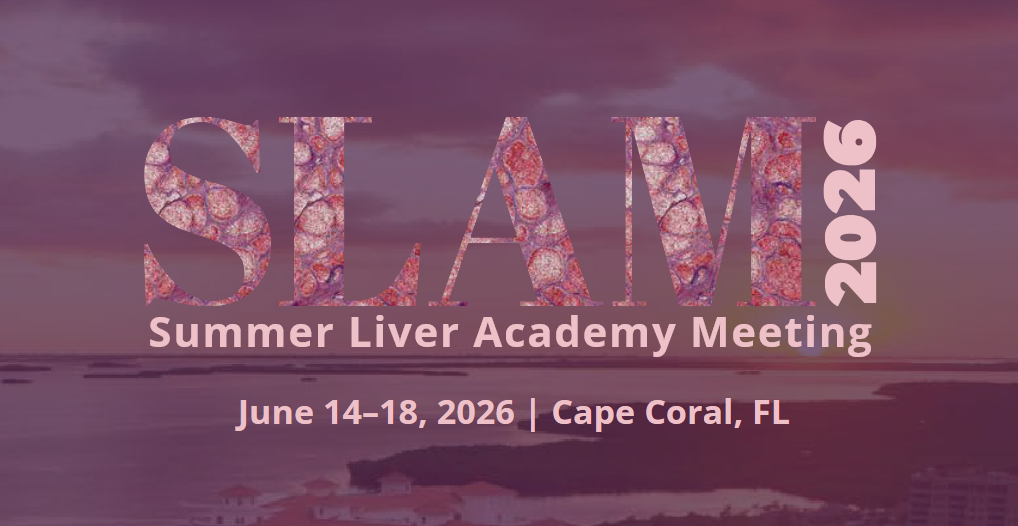
The 2026 Summer Liver Academy Meeting (SLAM), held June 14–18 in Cape Coral, Florida, brings together leading investigators, clinicians, and trainees to discuss cutting-edge advances in liver biology and disease. The program spans liver development and regeneration, cellular plasticity, liver injury and repair, MASH/MASLD, fibrosis, liver cancer, metabolism, microbiome research, stem cells, organoids, and emerging technologies. In addition to keynote lectures from internationally recognized scientists, the meeting features abstract-driven talks, poster sessions, networking opportunities, and career-development activities designed to foster collaboration across the liver research community.
Prof. Dr. Mathias Heikenwälder's presentation, “Novel Concepts of Combinatorial Liver Cancer Therapies: From Immune-Cell Modulation to Microbe Transplantation”, is part of the Liver Cancer session on the final day of the meeting. Based on his research program, the talk will likely focus on how chronic inflammation, immune-cell dysfunction, and the microbiome shape liver cancer development and response to treatment. Heikenwälder is known for pioneering work showing that the immune system and gut microbiota are not just bystanders in hepatocellular carcinoma (HCC) but active drivers of disease progression and therapeutic outcomes. The presentation is expected to discuss emerging combination strategies that integrate immune modulation with microbiome-based interventions—potentially including microbiota transplantation or targeted microbial manipulation—to enhance anti-tumor immunity and improve the efficacy of systemic liver cancer therapies. The overarching theme is that successful future treatments may need to target both the tumor and its immune/microbial environment simultaneously.
Prof. Dr. Mathias Heikenwälder was not the only speaker of the UKT, Prof. Dr. med. Lars Zender and Prof. Dr. Jan Stephan Tchorz had the opportunity to hold a presentation at the SLAM as well.
Prof. Dr. med. Lars Zender presented “Cell Competition in the Liver: Friend or Foe?”, highlighting how interactions between healthy and transformed hepatocytes influence liver regeneration, tissue fitness, and tumor development. In his talk, he discussed how cell competition serves as a quality-control mechanism that can eliminate damaged cells but may also be exploited during hepatocarcinogenesis. The presentation will provide new insights into how manipulating these processes could lead to innovative strategies for preventing or treating liver cancer.
Whereas, Prof. Dr. Jan Tchorz illustrated “Metabolic Reprogramming in Chronic Liver Disease”, focusing on how alterations in hepatic metabolism drive disease progression and influence liver cell identity. His presentation explored the molecular pathways that link metabolic dysfunction to fibrosis, regeneration, and chronic liver injury, emphasizing how these pathways can be therapeutically targeted. He talked about how understanding metabolic rewiring may enable the development of more effective treatments for chronic liver diseases and metabolic dysfunction-associated steatotic liver disease (MASLD).
Find out more about this Meeting and the other presentations: https://www.asip.org/wp-content/uploads/2026/06/SLAM-Meeting-Program_FINAL.pdf, https://www.asip.org/slam-2026/