When the Body’s Defenses Go Too Far: How an Antiviral Protein Can Disrupt Placental Development
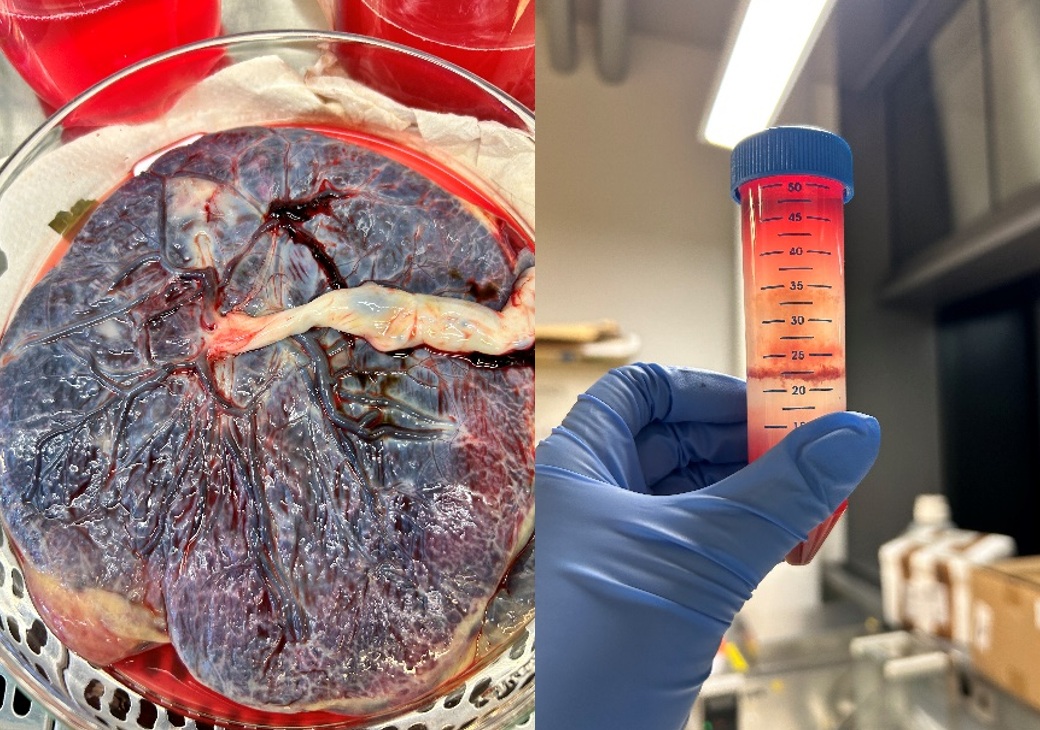
The placenta is a temporary but vital organ that forms during pregnancy to nourish and protect the growing fetus. One of its key building blocks is the syncytiotrophoblast, a specialized cell layer formed by the fusion of placental cells—a process essential for normal placenta development. Surprisingly, this fusion relies on ancient viral proteins called Syncytins, which our ancestors captured from retroviruses millions of years ago.
But what if the body mistakes these helpful viral proteins for dangerous intruders?
In a recent study, the Sauter lab found that the antiviral protein GBP5, which usually helps fight infections, can disrupt Syncytin-1—one of the key players in placental cell fusion. GBP5 blocks an enzyme called furin, which is required to activate Syncytin-1. Without this activation, Syncytin-1 can’t do its job properly, and fusion is impaired. Interestingly, Syncytin-2, a similar protein, is less affected because it can also be activated by another enzyme (PCSK7) that GBP5 doesn’t block.
This misfiring of the immune system might help explain why conditions such as preeclampsia, which are associated with increased immune responses, are linked to problems in placenta formation.
These findings suggest a delicate balance: while immune proteins such as GBP5 protect us from viruses, they can sometimes interfere with vital processes such as placenta formation during pregnancy. Understanding this interplay could help us find new ways to prevent or treat pregnancy complications in the future.
The results of this study have been published in Science Advances and can be found here.
Image: Isolation of placental cells (kindly provided by Yueshuang Lu)