
Das Klinikum
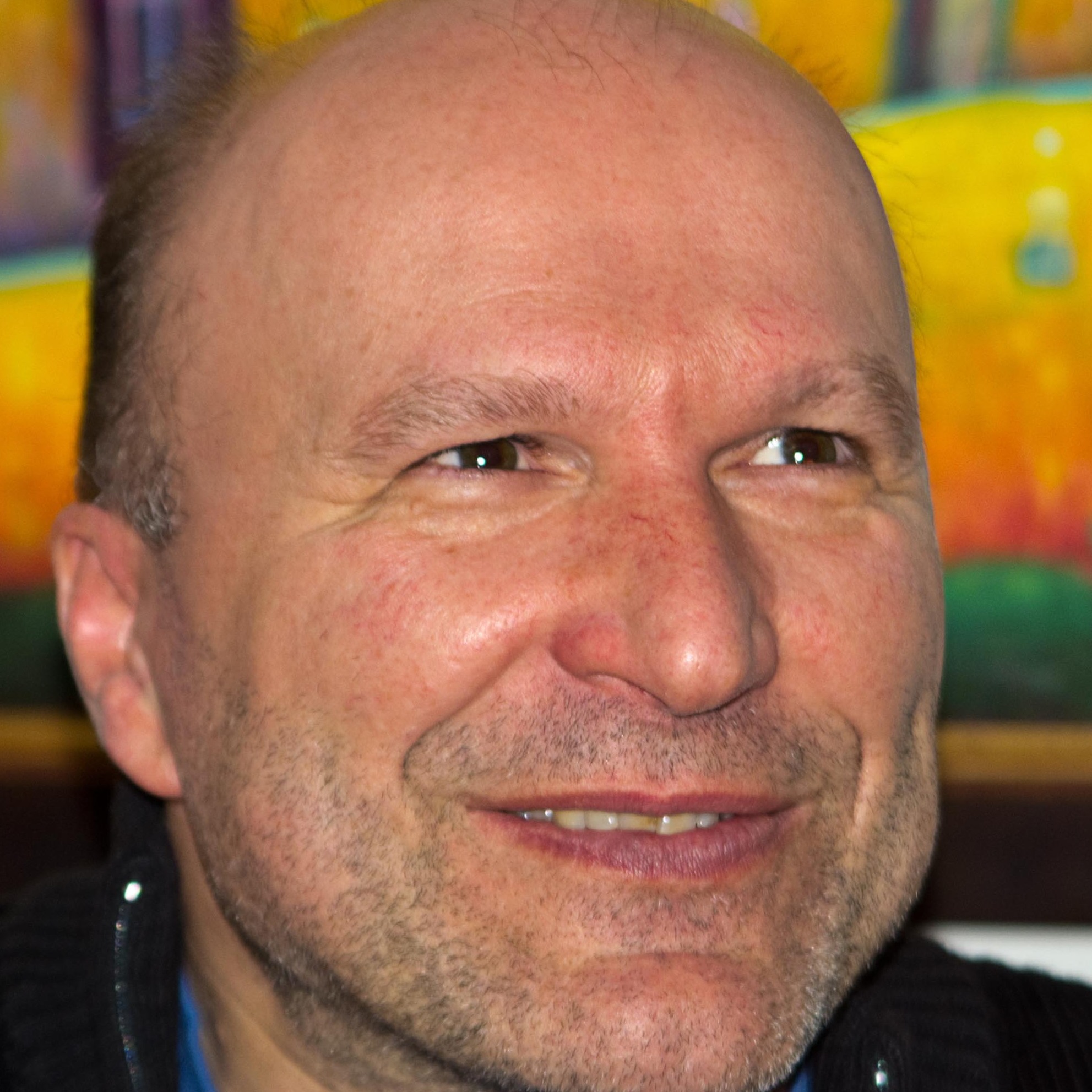
Apl. Prof. Dr. Thomas Wieder
Stellvertretender Leiter
Dozent
Laborleiter
Leitung der AG Signaltransduktion der Seneszenz
Kontakt
Telefonnummer: 07071-2978240
Faxnummer: 07071-292273
E-Mail-Adresse: thomas.wieder@uni-tuebingen.de
Klinik / Institut / Zentrum
Klinische Schwerpunkte
- Biochemie
- Physiologie
- Signaltransduktion
- Dermatologische Forschung
Wissenschaftliche Tätigkeit
- Untersuchungen zum Lipidstoffwechsel
- Wissenschaftliche Arbeiten zur Apoptose
- Programmierter Erythrozytentod (Eryptose)
- Tumorzell-Seneszenz
- Zytokin-induzierte Seneszenz
- Immuntherapie von Tumoren
Ausbildung & beruflicher Werdegang
-
1984 bis 1990Studium der Biochemie an der Freien Universität Berlin
-
26. Mai 1993Promotion am Fachbereich Chemie (Dr. rer. nat.) der Freien Universität Berlin
-
1993 bis 1997Post-Doc an der Haut- und Poliklinik des Universitätsklinikums Benjamin Franklin der Freien Universität Berlin
-
1998 bis 2002Laborleiter in der Medizinischen Klinik mit Schwerpunkt Hämatologie, Onkologie und Tumorimmunologie; Charité, Humboldt Universität Berlin
-
2002 bis 2006Oberassisstent im Physiologischen Institut der Universität Tübingen
-
2006 bis 2021Wissenschaftlicher Mitarbeiter in der Universitäts-Hautklinik der Universität Tübingen
-
2010 bis heuteApl. Professor (Biochemie)
-
2020 bis 2025Kommissarischer Leiter des Physiologischen Instituts, Abt. für Klinische und Vegetative Physiologie
-
2025 bis heuteStellvertretender Leiter des Physiologischen Instituts, Abt. für Klinische und Vegetative Physiologie
Publikationen
- Wieder, Th., Orfanos, C.E. and Geilen, C.C. (1998) Induction of ceramide-mediated apoptosis by the anticancer phospholipid analog, hexadecylphosphocholine. J. Biol. Chem. 273: 11025-11031.
- Wieder, Th., Eßmann, F., Prokop, A., Schmelz, K., Schulze-Osthoff, K., Beyaert, R., Dörken, B., and Daniel, P. T. (2001) Activation of caspase-8 in drug-induced apoptosis of B-lymphoid cells is independent of CD95/Fas receptor-ligand interaction and occurs downstream of caspase-3. Blood 97: 1378-1387.
- Lang, K.S., Myssina, S., Brand, V., Sandu, C., Lang, P. A., Berchtold, S., Huber, S. M., Lang, F., and Wieder, Th. (2004) Involvement of ceramide in hyperosmotic shock-induced death of erythrocytes. Cell Death Differ. 11: 231-243.
- Lang, P. A., Schenck, M., Nicolay, J. P., Becker, J. U., Kempe, D. S., Lupescu, A., Koka, S., Eisele, K., Klarl, B. A., Rübben, H., Schmid, K. W., Mann, K., Hildenbrand, S., Hefter, H., Huber, S. M., Wieder, Th., Erhardt, A., Häussinger, D., Gulbins, E. and Lang, F. (2007) Liver cell death and anemia in Wilson´s disease involve acid sphingomyelinase and ceramide. Nat. Med. 13: 164-170.
- Müller-Hermelink, N., Braumüller, H., Pichler, B., Wieder, Th., Mailhammer, R., Schaak, K., Ghoreschi, K., Yazdi, A., Haubner, R., Sander, C. A., Mocikat, R., Schwaiger, M., Förster, I., Huss, R., Weber, W. A., Kneilling, M. and Röcken, M. (2008) TNFR1- and IFN-γ-signaling determine whether T cells induce tumor dormancy or promote multistage carcinogenesis. Cancer Cell 13: 507-518.
- Ghashghaeinia, M., Cluitmans, J.C.A., Akel, A., Dreischer, P., Toulany, M., Köberle, M., Skabytska, Y., Saki, M., Biedermann, T., Duszenko, M., Lang, F., Wieder, Th.,* and Bosman, G.J.C.G.M.* (2012) The impact of erythrocyte age on eryptosis. Br. J. Haematol. 157: 606-614. *shared senior authorship
- Braumüller, H.,* Wieder, Th.,* Brenner, E., Aßmann, S., Hahn, M., Alkhaled, M., Schilbach, K., Essmann, F., Kneilling, M., Griessinger, C., Ranta, F., Ullrich, S., Mocikat, R., Braungart, K., Mehra, T., Fehrenbacher, B., Berdel, J., Niessner, H., Meier, F., van den Broek, M., Häring, H.-U., Handgretinger, R., Quintanilla-Martinez, L., Fend, F., Pesic, M., Bauer, J., Zender, L., Schaller, M., Schulze-Osthoff, K., and Röcken, M. (2013) T-helper-1-cell cytokines drive cancer into senescence. Nature 494: 361-365. *shared first authorship
- Wieder, Th., Eigentler, T., Brenner, E. and Röcken, M. (2018) Immune checkpoint blockade therapy. J Allergy Clin. Immunol. 142: 1403-1414.
- Rentschler, M., Chen, Y., Pahl, J., Soria-Martinez, L., Braumüller, H., Brenner, E., Bischof, O., Röcken, M. and Wieder, Th. (2018) Nuclear translocation of Argonaute 2 in cytokine-induced senescence. Cell Physiol. Biochem., 51: 1103-1118.
- Brenner, E., Schörg, B., Ahmetlić, F., Wieder, Th., Hilke, F.-J., Simon, N., Schroeder, C., Demidov, G., Riedel, T., Fehrenbacher, B., Schaller, M., Forschner, A., Eigentler, T., Niessner, H., Sinnberg, T., Böhm, K., Hömberg, N., Braumüller, H., Dauch, D., Zwirner, S., Zender, L., Sonanini, D., Geishauser, A., Bauer, J., Eichner, M., Jarick, K., Beilhack, A., Biskup, S., Döcker, D., Schadendorf, D., Quintanilla-Martínez, L., Pichler, B., Mocikat, R., Kneilling, M. and Röcken, M. (2020) Cancer immune control needs senescence induction by interferon-dependent cell cycle regulator pathways in tumours. Nat. Commun. 11: 1335.
- Krause, B. M., Bauer, B., Neudörfl, J.-M., Wieder, Th., and Schmalz, H.-G. (2021) ItaCORMs: Conjugation with a CO-releasing unit greatly enhances the anti-inflammatory activity of itaconates. RSC Medicinal Chemistry 12: 2053-2059.
- Dreischer, P., Duszenko, M., Stein, J.,and Wieder, Th. (2022) Eryptosis: Programmed Death of Nucleus-Free, Iron-Filled Blood Cells. Cells 11: 503.
- Rentschler, M., Braumüller, H., Briquez, P.S., and Wieder, Th. (2022) Cytokine-induced senescence in the tumor microenvironment and its effects on anti-tumor immune responses. Cancers 14: 1364.
- Homann, L., Rentschler, M., Brenner, E., Böhm, K., Röcken, M., and Wieder, Th. (2022) IFN-gamma and TNF induce senescence and a distinct senescence-associated secretory phenotype in melanoma. Cells 11: 1514.
- Braumüller, H., Mauerer, B., Andris, J., Berlin, C., Wieder, Th. and Kesselring, R. (2023) The cytokine network in colorectal cancer: Implications for new treatment strategies. Cells 12: 138.
- Pan, X., Giustarini, D., Lang, F., Rossi, R., Wieder Th., Köberle, M., and Ghashghaeinia, M. (2023) Desipramine induces eryptosis in human erythrocytes, an effect blunted by nitric oxide donor sodium nitroprusside and N-acetyl-L-cysteine but enhanced by calcium depletion. Cell cycle 22: 1777-1803.
- Zheng, Z., Wieder Th., Mauerer, B., Schäfer, L., Kesselring, R., and Braumüller, H. (2023) T cells in colorectal cancer: unravelling the function of different T cell subsets in the tumor microenvironment. Int. J. Mol. Sci. 24: 11673.
- Bissinger, R., Schaefer, L., Bohnert, B. N., Schork, A., Hoerber, S., Peter, A., Qadri, S. M., Birkenfeld, A. L., Heyne, N., Bakchoul, T., Wieder, Th., and Artunc, F. (2025) GFR is a key determinant of red blood cell survival in anemia associated with progressive CDK. Kidney Int. Rep. 10: 730-742..
- Tkachenko, A., Alfhili, M., Alsughayyir, J., Attanzio, A., Al mamun Bhuyan, A., Bukowska, B., Cilla, A., Quintanar-Escorza, M., Föller, M., Havranek, O., Jilani, K., Onishchenko, A., Pretorius, E., Prokopiuk, V., Restivo, I., Tesoriere, L., Virzi, G. M., and Wieder, Th. (2025) Current understanding of eryptosis: mechanisms, physiological functions, role in disease, pharmacological applications, and nomenclature recommendations. Cell Death Dis. 16: 467.
- Tkachenko, A., Havranek, O., Lang, F., Lang, K. S., and Wieder, Th. (2025) Redefining the concept of erythrocyte senescence: is eryptosis fundamentally different from erythrocyte senescence? GeroScience https.//doi.org/10.10007/s11357-025-02010-z: published online.
- Rentschler, M., Ali-Jarboui, M., Griessinger, C. M., Rosen, M., Doré, G., Bischof, O., Kneilling, M., Röcken, M., Braumüller, H., and Wieder, Th. (2026) Cytokine-induced senescence in tumors is based on sustained activation of STAT1- and NFkB-dependent gene regulatory signatures.GeroScience https.//doi.org/10.10007/s11357-026-02100-6: published online.
Veranstaltungen / Vorlesungen
- Vorlesung Humanbiologie 2 für Studenten/innen des Studiengangs Medizintechnik
- Vorlesung Humanbiologie 3 für Studenten/innen des Studiengangs Medizintechnik
- Vorlesung Molekulare Grundlagen der Krebsentstehung; Modul Molekularbiologie II für Studenten/innen des Studiengangs Molekulare Medizin
- Studienpate im Lernportfolio Humanmedizin für Medizinstudenten/innen
- Hauptvorlesung Vegetative Physiologie (S0304VPHY) für Studierende der Studiengänge Humanmedizin, Zahnmedizin, Molekulare Medizin und Informatik
- Seminar Vegetative Physiologie (S0304SPHY) für Studierende der Studiengänge Humanmedizin, Zahnmedizin und Molekulare Medizin
- Repetitorium Vegetative Physiologie für Studierende der Studiengänge Humanmedizin, Zahnmedizin und Molekulare Medizin