
Cancer evolves through a stepwise process of cellular reprogramming that enables tumor cells to proliferate, spread, and escape immune surveillance. Targeted drugs interfere with cellular processes that drive tumor growth and survival, while immunotherapies can restore immune-mediated clearance of malignant cells. Although these approaches have improved treatment options for patients with liver cancer, their efficacy remains limited, highlighting the need for more effective therapeutic strategies. Our goal is to identify tumor cell vulnerabilities and exploit tumor cell–intrinsic mechanisms to develop rational combination strategies that enhance responses to immunotherapy. To this end, we apply genetic screens as well as proteomic and transcriptomic profiling to systematically identify and characterize targetable pathways. These approaches are complemented by functional validation in cell-based systems and immunocompetent mouse models of liver cancer, allowing us to link tumor cell–intrinsic states to immune responses in a physiological context. Ultimately, our work aims to provide a mechanistic basis for novel combination therapies that improve immunotherapy outcomes in liver cancer.
Novel treatment options for liver cancer

Biosketch
Verena Wagner studied medicine at Heidelberg University and completed her doctoral thesis at the German Cancer Research Center (DKFZ), where she investigated the use of novel small molecules for the treatment of hematologic malignancies. After graduation, she joined the Department of Gastroenterology, Hepatology, and GI Oncology in Tübingen.
During her postdoctoral fellowship in the group of Jesús Gil at Imperial College London, she investigated vulnerabilities of RAS-driven premalignant and malignant cells and explored drug combinations that leverage senescence for cancer therapy.
She is now continuing her work as a clinician scientist and group leader at the Department of Gastroenterology and the M3 Research Center in Tübingen. Her current research focuses on tumor cell–intrinsic mechanisms in liver cancer and their therapeutic exploitation to enhance immunotherapy responses.
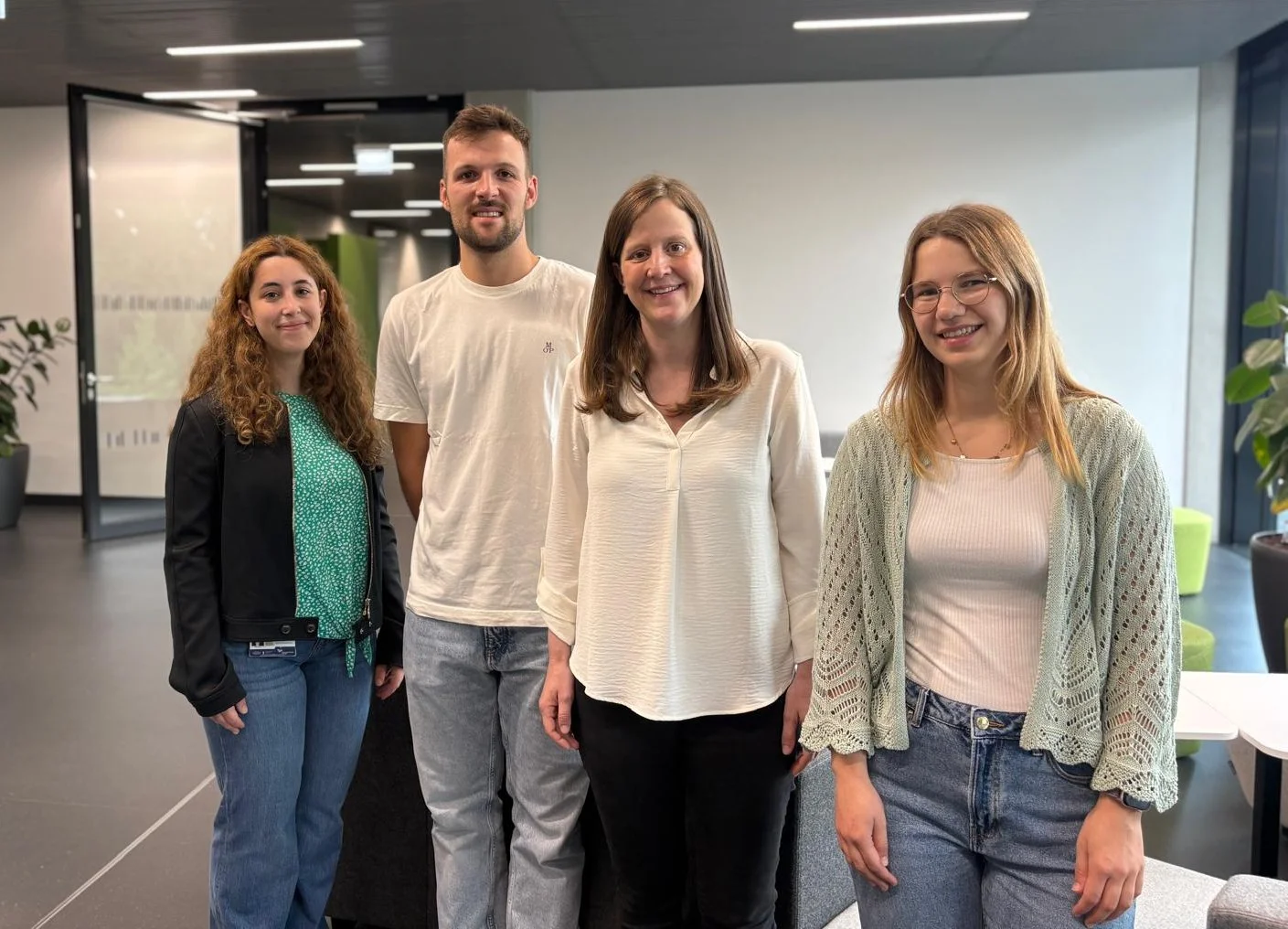
Team

identification
of new vulnerabilities of tumor cells
new
treatment strategies in combination with existing drugs or immunotherapy
enhance
anti-cancer effects
Selected publications
-
2026
Spliceosome induction is a druggable dependency of RAS-driven senescence and cancer
Wagner V, Bousset L, Ascensão-Ferreira M, Sun B, Barragan Avila JE, Kaizeler A, Martins-Silva R, Rahbari M, Fernández-Vaquero M, Haston S, Tinti M, Pombo J, Khadayate S, Roth S, Schürch CM, Martínez-Barbera JP, Bahat A, Wee KB, Morton JP, Malek N, Innes AJ, Vernia S, Barbosa-Morais NL, Gallage S, Heikenwalder M, Gil J. Spliceosome induction is a druggable dependency of RAS-driven senescence and cancer.Nat Commun. 2026 Apr 15. doi: 10.1038/s41467-026-71564-z. Epub ahead of print. PMID: 41986348. https://doi.org/10.1038/s41467-026-71564-z -
2022
3-deazaadenosine (3DA) alleviates senescence to promote cellular fitness and cell therapy efficiency in mice
Guerrero A, Innes AJ, Roux PF, Buisman SC, Jung J, Ortet L, Moiseeva V, Wagner V, Robinson L, Ausema A, Potapova A, Perdiguero E, Weersing E, Aarts M, Martin N, Wuestefeld T, Muñoz-Cánoves P, de Haan G, Bischof O, Gil J. 3-deazaadenosine (3DA) alleviates senescence to promote cellular fitness and cell therapy efficiency in mice.Nat Aging. 2022 Sep;2:851-866. doi: 10.1038/s43587-022-00279-9. Epub 2022 Sep 13. PMID: 36438588; PMCID: PMC7613850. https://doi.org/10.1038/s43587-022-00279-9 -
2021
XPO7 is a tumor suppressor regulating p21(CIP1)-dependent senescence
Innes AJ, Sun B, Wagner V, Brookes S, McHugh D, Pombo J, Porreca RM, Dharmalingam G, Vernia S, Zuber J, Vannier JB, García-Escudero R, Gil J. XPO7 is a tumor suppressor regulating p21CIP1-dependent senescence.Genes Dev. 2021 Mar 1;35(5-6):379-391. doi: 10.1101/gad.343269.120. Epub 2021 Feb 18. PMID: 33602872; PMCID: PMC7919420. https://doi.org/10.1101/gad.343269.120 -
2020
T cells engineered to target senescence
Wagner V, Gil J. T cells engineered to target senescence.Nature. 2020 Jul;583(7814):37-38. https://doi.org/10.1038/d41586-020-01759-x -
2020
Senescence as a therapeutically relevant response to CDK4/6 inhibitors
Wagner V, Gil J. Senescence as a therapeutically relevant response to CDK4/6 inhibitors.Oncogene. 2020 Jul;39(29):5165-5176. doi: 10.1038/s41388-020-1354-9. Epub 2020 Jun 15. PMID: 32541838; PMCID: PMC7610384. https://doi.org/10.1038/s41388-020-1354-9 -
2019
Cardiac glycosides are broad-spectrum senolytics
Guerrero A, Herranz N, Sun B, Wagner V, Gallage S, Guiho R, Wolter K, Pombo J, Irvine EE, Innes AJ, Birch J, Glegola J, Manshaei S, Heide D, Dharmalingam G, Harbig J, Olona A, Behmoaras J, Dauch D, Uren AG, Zender L, Vernia S, Martínez-Barbera JP, Heikenwalder M, Withers DJ, Gil J. Cardiac glycosides are broad-spectrum senolytics.Nat Metab. 2019 Nov;1(11):1074-1088. doi: 10.1038/s42255-019-0122-z. Epub 2019 Oct 21. PMID: 31799499; PMCID: PMC6887543. https://doi.org/10.1038/s42255-019-0122-z -
2018
An Epigenetic Switch: From Senescent Melanocytes to Malignant Melanoma (and Back)
Wagner V, Gil J. An Epigenetic Switch: From Senescent Melanocytes to Malignant Melanoma (and Back).Cancer Cell. 2018 Feb 12;33(2):162-163. https://doi.org/10.1016/j.ccell.2018.01.013 -
2014
Preclinical efficacy of sepantronium bromide (YM155) in multiple myeloma is conferred by down regulation of Mcl-1
Wagner V, Hose D, Seckinger A, Weiz L, Meißner T, Rème T, Breitkreutz I, Podar K, Ho AD, Goldschmidt H, Krämer A, Klein B, Raab MS. Preclinical efficacy of sepantronium bromide (YM155) in multiple myeloma is conferred by down regulation of Mcl-1.Oncotarget. 2014 Nov 15;5(21):10237-50. https://doi.org/10.18632/oncotarget.2529