
The Oncobiome Lab

At the Oncobiome Lab, we investigate the emerging role of intratumoral microorganisms in cancer biology, with a primary focus on pancreatobiliary malignancies. Our research explores how the diverse microbial communities within tumors influence cancer hallmarks, disease progression, and treatment response.

We are particularly focused on understanding the mechanistic relationships between specific microbial signatures, their metabolites and cancer biology. By mapping these complex interactions at the molecular level, we aim to identify novel biomarkers and therapeutic targets that can be leveraged for precision oncology approaches.

We employ cutting-edge technologies including multi-omics analysis of patient cohorts, advanced imaging, and innovative in vitro and in vivo models to characterize the oncobiome and its functional impact. Through close collaboration with clinical partners and the Molecular Tumorboard Tuebingen, we work to translate our discoveries into practical applications that can improve diagnosis, treatment selection, and patient outcomes.

The ultimate vision of our lab is to harness our understanding of the oncobiome to develop personalized therapeutic strategies that target the unique microbial-host interactions within each patient's tumor, advancing the field of precision medicine in pancreatobiliary cancers.
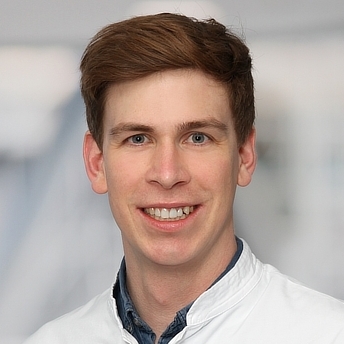
Dr. Stephan Spahn is a Clinician Scientist investigating the intratumoral microbiome—cancer's "second genome"—with a focus on pancreatobiliary malignancies. He earned his M.D. from the University of Heidelberg, with additional training at Université Lyon and MD Anderson Cancer Center. In 2017, he began his residency in Internal Medicine with a focus on Gastro-Oncology at University Hospital Tübingen. From 2021 to 2025, he conducted postdoctoral research under Dr. Ravid Straussman at the Weizmann Institute of Science, studying the interplay between intratumoral bacterial metabolism, tumor immunity, and immunotherapy response.

Back in Tübingen, Dr. Spahn is establishing his independent junior research group at the M3 Research Institute and University Hospital Tübingen. His research aims to characterize and therapeutically target intratumoral bacteria to develop novel approaches for cancer treatment.

Open positions

Intratumoral microbiome
cancer hallmarks interactions
CCA & PDAC
Pancreatobiliary Cancer
Precision Oncology
FGFR2/IDH1 targeted therapies

Selected publications

  • The molecular interaction pattern of lenvatinib enables inhibition of wild-type or kinase-mutated FGFR2-driven cholangiocarcinoma

    Spahn S, Kleinhenz F, Shevchenko E, Stahl A, Rasen Y, Geisler C, Ruhm K, Klaumuenzer M, Kronenberger T, Laufer SA, Sundberg-Malek H, Bui KC, Horger M, Biskup S, Schulze-Osthoff K, Templin M, Malek NP, Poso A, Bitzer M. The molecular interaction pattern of lenvatinib enables inhibition of wild-type or kinase-mutated FGFR2-driven cholangiocarcinoma. Nat Commun. 2024 Feb 12;15(1):1287. doi: 10.1038/s41467-024-45247-6. PMID: 38346946; PMCID: PMC10861557. https://doi.org/10.1038/s41467-024-45247-6
  • Compartmentalization of the host microbiome: how tumor microbiota shapes checkpoint immunotherapy outcome and offers therapeutic prospects

    Boesch M, Horvath L, Baty F, Pircher A, Wolf D, Spahn S, Straussman R, Tilg H, Brutsche MH. Compartmentalization of the host microbiome: how tumor microbiota shapes checkpoint immunotherapy outcome and offers therapeutic prospects. J Immunother Cancer. 2022 Nov;10(11):e005401. doi: 10.1136/jitc-2022-005401. PMID: 36343977; PMCID: PMC9644363. https://doi.org/10.1136/jitc-2022-005401
  • Comprehensive clinical and virological characterization of three cases of fulminant liver failure owing to HSV1 primary infection

    Spahn S, Riessen R, Berg CP, Malek NP, Emrich MH, Lohrengel K, Ganzenmueller T, Iftner T, Kleymann G, Hamprecht K. Comprehensive clinical and virological characterization of three cases of fulminant liver failure owing to HSV1 primary infection. Liver Int. 2022 May;42(5):1005-1011. doi: 10.1111/liv.15215. Epub 2022 Mar 7. PMID: 35230726. https://doi.org/10.1111/liv.15215
  • Prognosis of patients with hepatocellular carcinoma treated with immunotherapy - development and validation of the CRAFITY score

    Scheiner B, Pomej K, Kirstein MM, Hucke F, Finkelmeier F, Waidmann O, Himmelsbach V, Schulze K, von Felden J, Fründt TW, Stadler M, Heinzl H, Shmanko K, Spahn S, Radu P, Siebenhüner AR, Mertens JC, Rahbari NN, Kütting F, Waldschmidt DT, Ebert MP, Teufel A, De Dosso S, Pinato DJ, Pressiani T, Meischl T, Balcar L, Müller C, Mandorfer M, Reiberger T, Trauner M, Personeni N, Rimassa L, Bitzer M, Trojan J, Weinmann A, Wege H, Dufour JF, Peck-Radosavljevic M, Vogel A, Pinter M. Prognosis of patients with hepatocellular carcinoma treated with immunotherapy - development and validation of the CRAFITY score. J Hepatol. 2022 Feb;76(2):353-363. doi: 10.1016/j.jhep.2021.09.035. Epub 2021 Oct 12. PMID: 34648895. https://doi.org/10.1016/j.jhep.2021.09.035
  • Targeting extracellular and juxtamembrane FGFR2 mutations in chemotherapy-refractory cholangiocarcinoma

    Bitzer M, Spahn S, Babaei S, Horger M, Singer S, Schulze-Osthoff K, Missios P, Gatidis S, Nann D, Mattern S, Scheble V, Nikolaou K, Armeanu-Ebinger S, Schulze M, Schroeder C, Biskup S, Beha J, Claassen M, Ruhm K, Poso A, Malek NP. Targeting extracellular and juxtamembrane FGFR2 mutations in chemotherapy-refractory cholangiocarcinoma. NPJ Precis Oncol. 2021 Sep 3;5(1):80. doi: 10.1038/s41698-021-00220-0. PMID: 34480077; PMCID: PMC8417271. https://doi.org/10.1038/s41698-021-00220-0
  • NASH limits anti-tumour surveillance in immunotherapy-treated HCC

    Pfister D, Núñez NG, Pinyol R, Govaere O, Pinter M, Szydlowska M, Gupta R, Qiu M, Deczkowska A, Weiner A, Müller F, Sinha A, Friebel E, Engleitner T, Lenggenhager D, Moncsek A, Heide D, Stirm K, Kosla J, Kotsiliti E, Leone V, Dudek M, Yousuf S, Inverso D, Singh I, Teijeiro A, Castet F, Montironi C, Haber PK, Tiniakos D, Bedossa P, Cockell S, Younes R, Vacca M, Marra F, Schattenberg JM, Allison M, Bugianesi E, Ratziu V, Pressiani T, D'Alessio A, Personeni N, Rimassa L, Daly AK, Scheiner B, Pomej K, Kirstein MM, Vogel A, Peck-Radosavljevic M, Hucke F, Finkelmeier F, Waidmann O, Trojan J, Schulze K, Wege H, Koch S, Weinmann A, Bueter M, Rössler F, Siebenhüner A, De Dosso S, Mallm JP, Umansky V, Jugold M, Luedde T, Schietinger A, Schirmacher P, Emu B, Augustin HG, Billeter A, Müller-Stich B, Kikuchi H, Duda DG, Kütting F, Waldschmidt DT, Ebert MP, Rahbari N, Mei HE, Schulz AR, Ringelhan M, Malek N, Spahn S, Bitzer M, Ruiz de Galarreta M, Lujambio A, Dufour JF, Marron TU, Kaseb A, Kudo M, Huang YH, Djouder N, Wolter K, Zender L, Marche PN, Decaens T, Pinato DJ, Rad R, Mertens JC, Weber A, Unger K, Meissner F, Roth S, Jilkova ZM, Claassen M, Anstee QM, Amit I, Knolle P, Becher B, Llovet JM, Heikenwalder M. NASH limits anti-tumour surveillance in immunotherapy-treated HCC. Nature. 2021 Apr;592(7854):450-456. doi: 10.1038/s41586-021-03362-0. Epub 2021 Mar 24. PMID: 33762733; PMCID: PMC8046670. https://doi.org/10.1038/s41586-021-03362-0
  • Clinical and Genetic Tumor Characteristics of Responding and Non-Responding Patients to PD-1 Inhibition in Hepatocellular Carcinoma

    Spahn S, Roessler D, Pompilia R, Gabernet G, Gladstone BP, Horger M, Biskup S, Feldhahn M, Nahnsen S, Hilke FJ, Scheiner B, Dufour JF, De Toni EN, Pinter M, Malek NP, Bitzer M. Clinical and Genetic Tumor Characteristics of Responding and Non-Responding Patients to PD-1 Inhibition in Hepatocellular Carcinoma. Cancers (Basel). 2020 Dec 18;12(12):3830. doi: 10.3390/cancers12123830. PMID: 33353145; PMCID: PMC7766321. https://doi.org/10.3390/cancers12123830
  • Generation and functional characterization of epithelial cells with stable expression of SLC26A9 Cl- channels

    Salomon JJ, Spahn S, Wang X, Füllekrug J, Bertrand CA, Mall MA. Generation and functional characterization of epithelial cells with stable expression of SLC26A9 Cl- channels. Am J Physiol Lung Cell Mol Physiol. 2016 Apr 1;310(7):L593-602. doi: 10.1152/ajplung.00321.2015. Epub 2016 Jan 22. PMID: 26801567; PMCID: PMC4888553. https://doi.org/10.1152/ajplung.00321.2015